
Six Lessons From Steve Jobs' Twenties and Thirties
Summary
Success rarely looks like success while it's happening. Jobs was fired at 30, backing long-shot bets, and had no guarantee any of it would work. But he was building a set of behaviours. In this blog Jack shares what we can learn from one of history’s greatest creators:
Paint the back of fences: hold yourself to a high standard in private
Serendipity: follow your curiosity and allow it to unfold
Real artists ship: creativity doesn’t matter if you don’t execute
Question everything: approach life from first principles
Take risks: your 30s are meant for risks, take them!
Keep Reading
“This is the day I've been looking forward to for two and a half years.
Every once in a while, a revolutionary product comes along that changes everything. Today we're introducing three revolutionary products of this class.
The first one is a widescreen iPod with touch controls. The second is a revolutionary mobile phone. And the third is a breakthrough Internet communications device.
These are not three separate devices, this is one device, and we are calling it iPhone.”
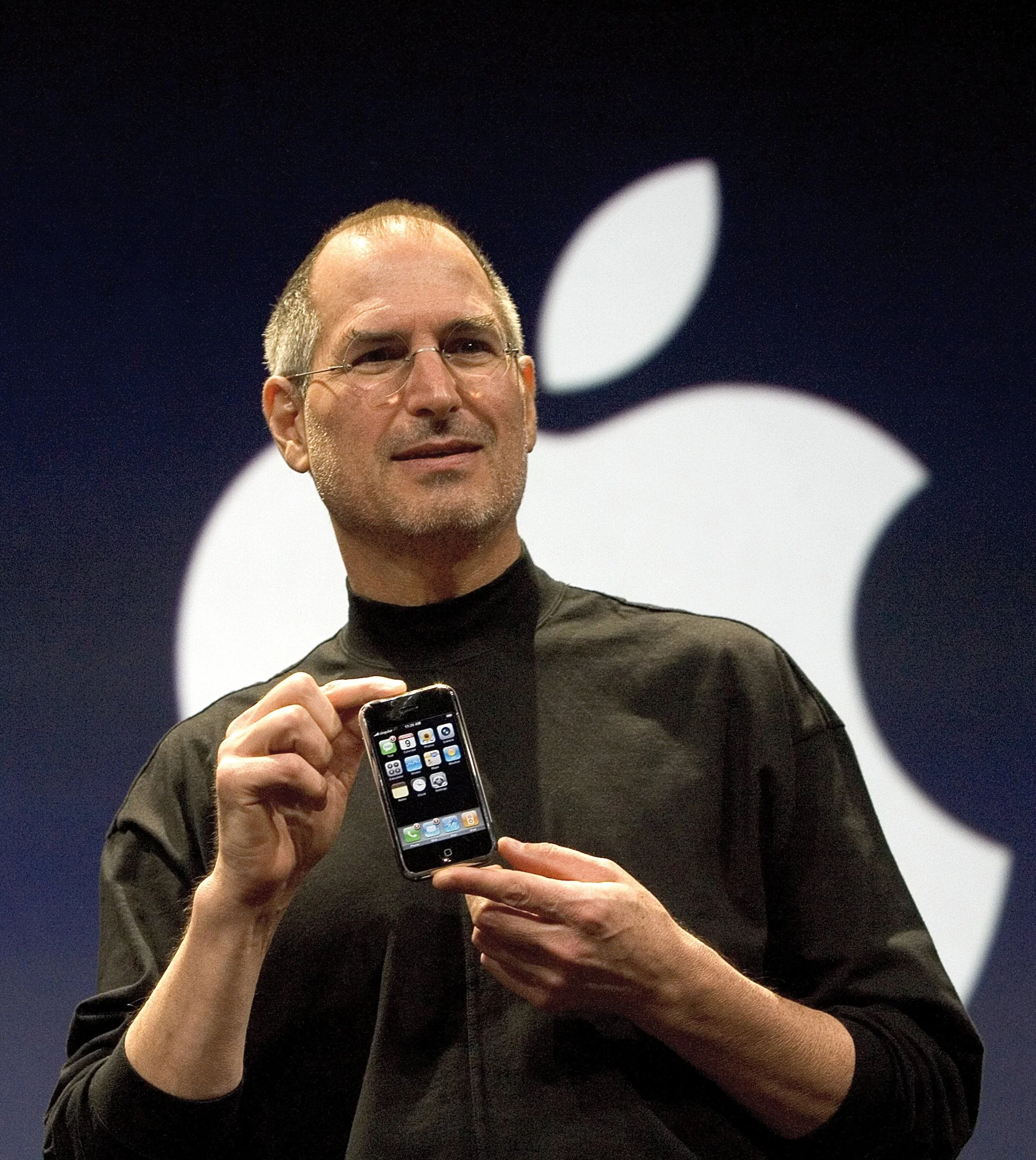
Steve Jobs presenting the first iPhone in 2007.
On stage at the iPhone’s launch event in San Francisco, Jobs had made it. He’d turned around Apple in the 90s, launching the iMac, iTunes and the iPod – now in 2007 he was sharing something revolutionary with the world.
We can study Jobs and all his successes in the 2000s, but it won’t help us emulate him. For that, we have to travel back into the part of his life that is just as roundabout and messy as the rest of ours.
Making it by 35 is the domain of sports and like many of you who read this blog, Jobs had by no means felt like he’d reached the pinnacle of his life by the age of 35. He had been fired from the company he started in his parents’ Los Altos garage; founded a largely unsuccessful high-end computer company; and acquired a fledgling hardware department from George Lucas.
You might think, “how can you say he wasn’t in a great place?” Yes, he’d founded a second company and bought the seeds of Pixar. But, like anybody else, when you’re fired from a company, let alone the one you started, you’re going to feel terrible. Here’s what he had to say about it:
“I feel like somebody just punched me in the stomach and knocked all my wind out. I’m only 30 years old and I want to have a chance to continue creating things. I know I’ve got at least one more great computer in me. And Apple is not going to give me a chance to do that.”
Whilst Jobs hadn’t made it, he was deep into the process of becoming the man that would revolutionise industries, leading me to the question, what behaviours, mindsets, and tools was he using by the age of 35?
Paint the back of fences – childhood
Here's something most people don't know - Steve Jobs was given up for adoption at birth. And his adoptive father, a mechanic named Paul Jobs, taught him something that would shape everything he ever built. When they were building a fence together, Paul stopped and said: “You've got to make the back - the part nobody will ever see - just as beautiful as the front. Because you will know it's there.”
Jobs never forgot it. When he built the 1984 Macintosh, he made sure the internal circuitry was beautiful even though no customer would ever open the case to see it.
Lesson: when you hold yourself to higher standards in private than you do in public, you will create something exceptional to share with the world.
Allow serendipity to unfold – age 17
When Jobs first went to university, he felt like his course was both a waste of time and of his parents’ money. He dropped off his course, but he didn’t leave the university. He stayed at his friend’s house and wrangled a deal with the university that let him drop in on any class that he wanted. One of those classes is the now infamous calligraphy course that would lead to the beautiful displays and fonts that we now associate with Apple.
Lesson: you don’t always need a plan or a reason for everything you do. Sometimes, “this interests me,” is a good enough reason.
Real artists ship – age 28
Before the 1984 Macintosh shipped, the team were beset by delays – many of them brought on by Jobs and his perfectionist tendencies, because for him, they weren’t creating a competitor for IBM, they were creating art. He said two things:
Real artists ship
Real artists sign their work
When the Macintosh finally shipped, he had every team member’s signature etched into the casing. No one would ever see those names. But they would know they were there.
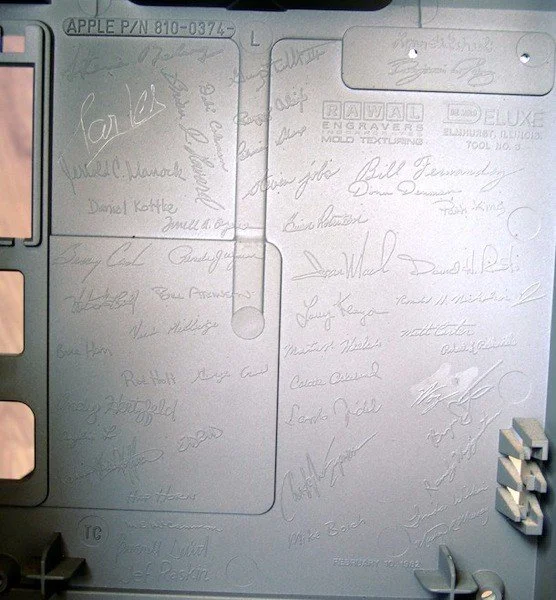
Every team member’s signature etched on the casing of the first Macintosh.
Lesson: when crunch time comes and you have to work insanely hard, the answer is never to cut corners. Create work that you are happy to put your signature on for the world to see.
Question everything – age 28
Despite his colleagues’ advice, he stripped back the design for the 1984 Macintosh, removing most of the functionality that the main computer buyer, the hobbyist, loved. His instincts were: normal people aren’t buying these machines because they’re made for computer nerds. The results? Average. As we said earlier, Jobs hadn’t yet had a stratospheric success and the 1984 Macintosh sales were still far behind IBM.
This type of thinking can be seen time and time again by the world’s inventors, who realise that they can’t ask their customers what they want because they don’t exist yet. Henry Ford wouldn’t have made his car if he’d asked horse users what they wanted and the Wright brothers wouldn’t have made the aeroplane if they asked car drivers what they needed.
Lesson: just because things are done that way, it doesn’t mean that they should always be that way.
Get back on your feet – age 30
Jobs would be fired from Apple just 18 months after the 1984 Macintosh and give the interview I shared above where he felt like he’d been punched in the gut.
What is remarkable is that he didn’t sit around feeling sorry for himself for too long. He founded a second computer company called NeXT and a year later bought a fledgling animation company.
Lesson: you only have one life and tragically Steve was over halfway by this point. When you get knocked down, fall forwards onto the next thing.
Take risky bets – age 31
One thing most entrepreneurs have in common is an insane appetite for risk. Whilst he was starting NeXT, he bought a fledgling computer division from George Lucas. Over the next few years, he would invest almost $50M of his personal money into this business called Pixar. George Lucas saw it as a cost centre. Steve Jobs saw it as the future.
Lesson: when we’re young, we have to invest our time and money into the future. The first port of call is investing in ourselves. We might not have $50M, but what if we invested $5000 in our own personal development? It’s not enough to join a training at work – buy your own books, spend your weekends learning and join courses that genuinely interest you.
Hindsight is a wonderful thing – age 50
It’s clear when you read all of these examples back that they lead to his stratospheric success. He would return to Apple and launch the iPhone; NeXT didn’t really pan out, but he would sell the software to Apple; and he would go on to sell his stake in Pixar to Disney for close to $4B.
However, at the time many people thought he was a reckless young entrepreneur. He trusted in himself and his methods, they didn’t all work in his 20s and 30s, but he’d built a muscle that would go on to serve him throughout the rest of his life. I’ll let Jobs finish the blog with his words just six years before his death:
“It was impossible to connect the dots looking forward when I was in college, but it was very, very clear looking backwards 10 years later. Again, you can't connect the dots looking forward. You can only connect them looking backwards. So you have to trust that the dots will somehow connect in your future. You have to trust in something, your gut, destiny, life, karma, whatever, because believing that the dots will connect down the road will give you the confidence to follow your heart, even when it leads you off the well-worn path, and that will make all the difference.”
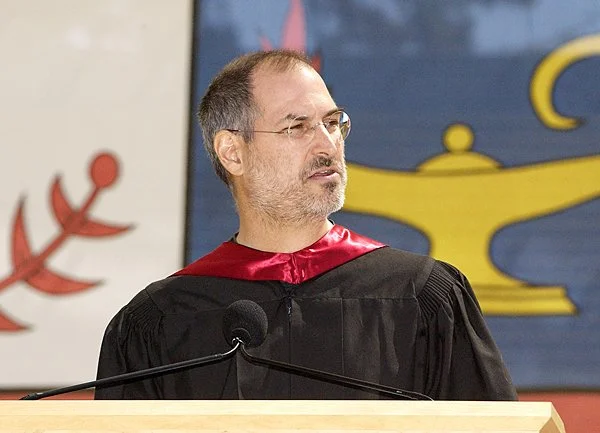
Steve Jobs delivering his famous Stanford Commencement Speech in 2005.
Deepen Your Curiosity
Watch this video from Jack Ma on what we should be doing in our decades of life
Steve Jobs’ commencement address at Stanford university is an inspiring classic
Read Walter Isaacson’s amazing biography on Steve Jobs
