
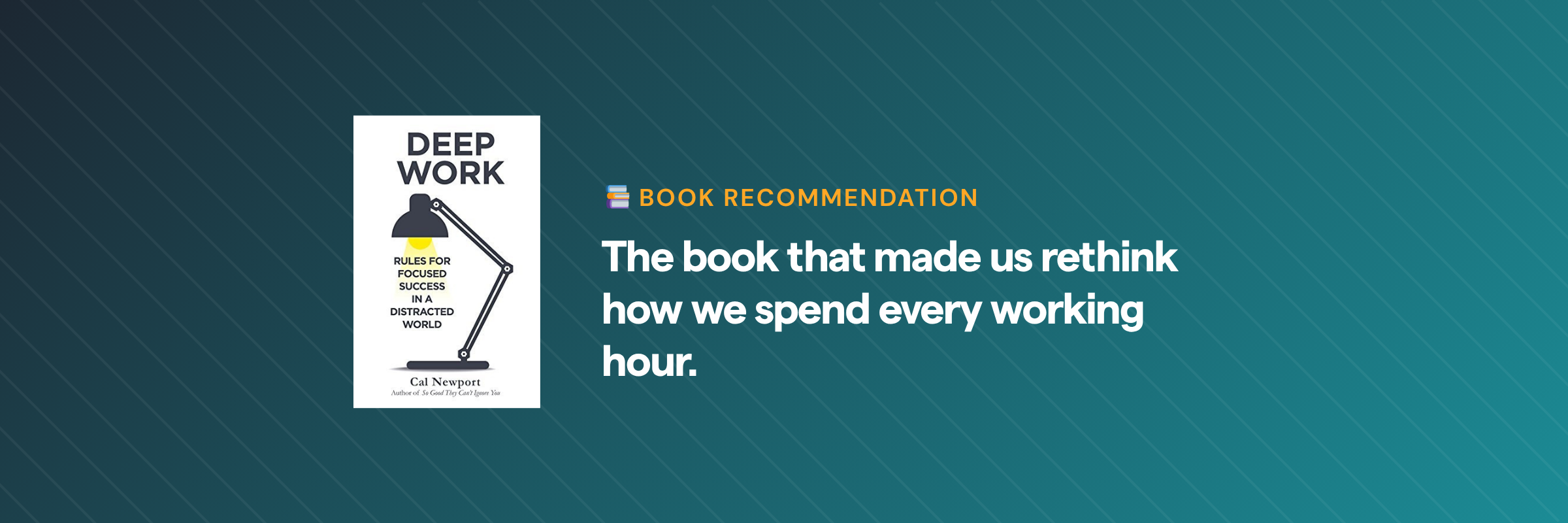
Deep Work - Cal Newport
OUR TAKE
Most of us are busy all day and have very little to show for it. Emails, meetings, notifications — we've confused activity with output. Cal Newport makes a simple but confronting argument: the ability to focus without distraction is becoming one of the rarest and most valuable skills in the modern economy. And most of us are letting it atrophy without realising it.
What it's about
Deep Work is Newport's case for the value of intense, distraction-free concentration — what he calls "deep work" — and why it's being crowded out by what he calls "shallow work": the low-value, highly visible busyness that fills most people's days. He draws on the habits of everyone from Carl Jung to Bill Gates to show that the people producing the most meaningful work across almost every field share one thing in common: they protect long, uninterrupted blocks of focused time.
The book is split into two parts. The first makes the case for why deep work matters. The second is practical — Newport offers four different frameworks for structuring your day around it, depending on your role and lifestyle.
KEY IDEAS
-
The ability to concentrate deeply is something you practise and build — or lose through years of distraction. Most people have let it erode without noticing.
-
Checking email, sitting in meetings, responding to Slack — none of it feels optional. Newport argues most of it is, or can be batched and contained so it stops dominating your day.
-
If you reach for your phone every time you have a spare moment, you're training your brain to crave stimulation and resist depth. Newport argues you need to practise being bored.
-
Newport is sceptical of relying on motivation or discipline alone. The deeper lever is designing your workspace, schedule, and habits so deep work becomes the default, not the exception.
“Clarity about what matters provides clarity about what does not.”
MAYBE SKIP IF
Your role is genuinely reactive and requires constant availability
You've already read Newport and built a deep work practice
You're looking for a short, light read — this one rewards slow reading
WHO THIS IS FOR
You end most days feeling busy but unproductive
You struggle to sit with a single task for more than 20 minutes
You want to produce better work in less time
You're trying to build a creative or knowledge-based practice
