
Why We Sleep - Matthew Walker
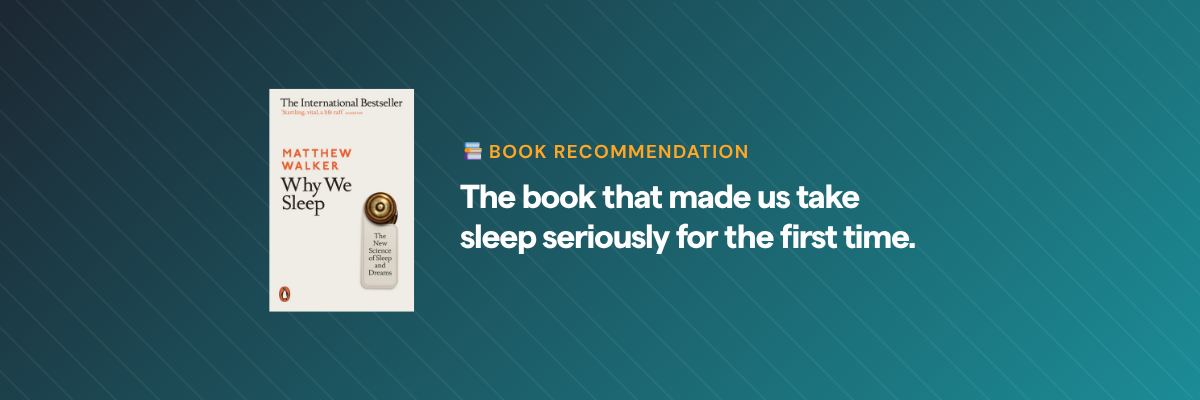
OUR TAKE
Most of us know we should sleep more. We just don't feel the urgency. This book creates the urgency. Matthew Walker is a neuroscientist who has spent his career studying sleep, and what he shares is both fascinating and quietly alarming. After reading it, you won't reach for your phone at 11pm the same way again — and that's exactly the point.
What it's about
Why We Sleep is the most comprehensive exploration of what sleep actually does — not just for your body, but for your memory, your emotional regulation, your immune system, your creativity, and your longevity. Walker draws on decades of sleep research to show that sleep isn't passive downtime. It's one of the most active and essential processes your body and brain go through every single day.
What makes it land is the specificity. This isn't a wellness book telling you to wind down before bed. It's science explaining precisely what happens during every hour of sleep — and what you lose when you cut it short.
KEY IDEAS
-
There is no part of your health that isn't affected by how much you sleep. Walker makes the case that sleep deprivation is one of the most underestimated health crises of the modern world.
-
The weekend lie-in doesn't undo the week's deficit. The damage from chronic under-sleeping accumulates in ways your body can't simply reverse.
-
Deep sleep consolidates facts and skills. REM sleep processes emotion and fuels creativity. You need both, in the right amounts, in the right order — which is why the timing of when you sleep matters as much as how long.
-
Alcohol doesn't help you sleep — it sedates you, which is not the same thing. Walker explains exactly why, and what it costs you.
“The shorter your sleep, the shorter your life. The leading causes of disease and death in developed nations — diseases that are crippling health-care systems — have all been linked to insufficient sleep.”
MAYBE SKIP IF
You already prioritise sleep and want practical tactics over science
You're prone to health anxiety — some chapters are confronting
You're looking for a quick, light read
WHO THIS IS FOR
You regularly get fewer than 7–8 hours and have made peace with it
You rely on caffeine to function in the mornings
You're trying to improve your energy, focus, or mood
You want to understand the science behind recovery
