
Big Rocks Before Small Stones
Summary
Why marginal gains are the finishing touch, not the starting point:
The British Cycling marginal gains story is brilliant - but we have been telling it backwards
There is a danger to “optimisation culture” when we lose sight of what is most important
Because more data does not necessarily mean better decision making
So pull the big levers first, then let the small gains compound
The old cliché
At the 1996 Atlanta Olympics, the British cycling team won just two bronze medals. They had for a long time been under-funded, poorly equipped and largely irrelevant on the world stage.
But things were already starting to change. In 1994, the Manchester Velodrome had opened, a state-of-the-art home for British Cycling. A few years later, National Lottery funding arrived in British sport for the first time. Peter Keen was appointed Performance Director and brought in coaches, sports scientists and a structured, data-led approach to training.
Now this next part might sound familiar. In 2003, Dave Brailsford took over as Performance Director and introduced what he called the aggregation of marginal gains: break down everything that goes into riding a bike, improve each part by just one per cent, and those gains, while immaterial in isolation, together compound into something significant.
His team obsessed over everything, and I mean everything. The aerodynamics of the bikes. The mattresses the riders slept on. The timing of every meal. Even the way riders washed their hands. At the 2008 Beijing Olympics, Team GB won eight cycling golds - a level of dominance nobody had seen coming. Four years later, at London 2012, they won twelve medals, eight of them gold.
Brailsford was knighted and marginal gains became the hero of the story. It has since been glamorised, preached and practised everywhere from sport to business to the arts.
It is a brilliant story. I have told it to clients for years. Perhaps you have heard it too? For a long time, I told it with one simple message: obsess over the small stuff because it all adds up. My view has since changed.
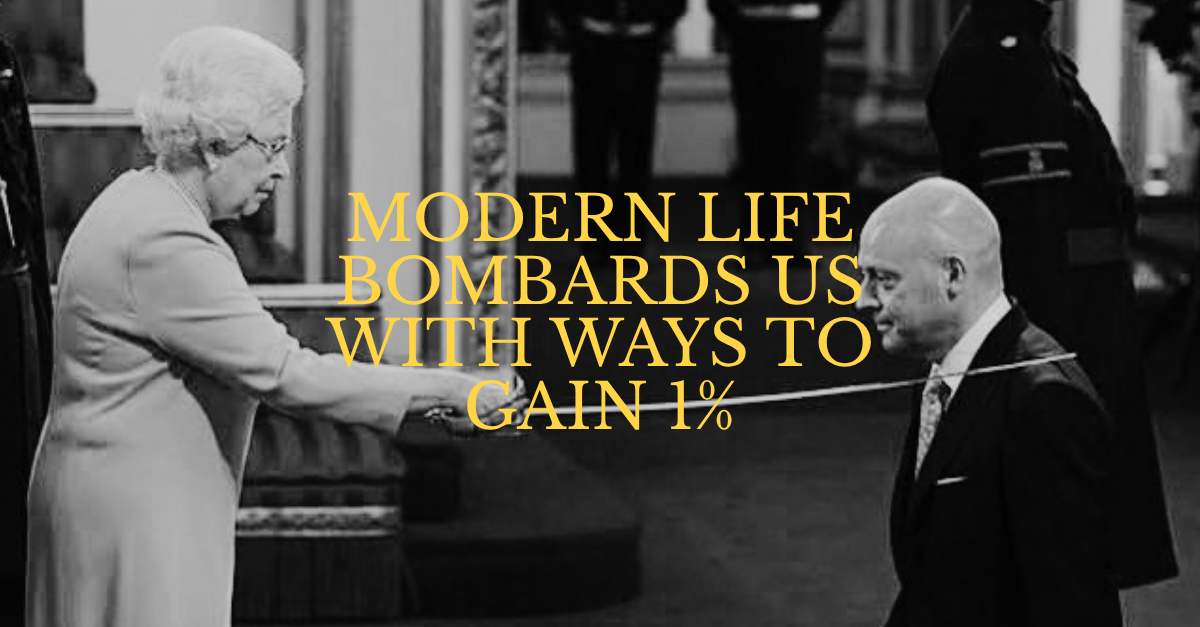
Sir David Brailsford being knighted by Queen Elizabeth II in 2013 after tremendous success at the Olympics the year before.
The problem with optimising everything
Walk into almost any gym today and you will see it. A watch tracking heart-rate variability. A ring measuring sleep. An app reporting VO2 max, recovery, readiness and resting heart rate. Used well, all that data can help. But more information does not necessarily lead to better decisions.
Brad Stulberg calls this collective fixation with measuring and improving every part of ourselves "optimisation culture". One of its great paradoxes is that, in trying to optimise every small part of our life, we can make the whole experience worse. We have taken a mentality designed for elite athletes chasing hundredths of a second around a velodrome in spandex and funny hats, and applied it to ordinary people simply trying to work, raise families and live a more energised, meaningful life.
And elite programmes do not simply hand an athlete forty metrics and tell them to work it out. Coaches and specialists collect the data, interpret it, filter it and direct the athlete towards a few clear actions. If too much information can distract someone whose full-time job is performance, what makes us think we can absorb it all alongside everything else? We can't.
The more data we collect, the more of our attention it consumes. Instead of helping us focus on what matters, our tracking becomes another distraction from it.
1% gains make sense when you’re competing for the Olympics. But in our everyday lives, there is a real risk of becoming obsessed with the wealth of data we have on our wrists and in our pockets.
When self-improvement becomes self-obsession
There is a deeper risk here too, one I have written about before. When we constantly monitor our steps, sleep, macros, screen time and productivity, we are constantly monitoring ourselves. What began as self-improvement can quickly become anxious self-absorption, disguised in the language of optimisation.
Yet we feel and perform at our best when we are absorbed in something beyond ourselves. Flow does not arrive while you are checking your readiness score. Connection does not deepen while you are glancing at your watch mid-conversation. It happens when you are fully engaged in what is in front of you, when you lose track of time and stop thinking about yourself.
Big rocks before small stones
"So where does this leave marginal gains, Pat?" Not in the bin. But firmly in second place.
The popular version of the British Cycling story starts with Brailsford and the pillows. The real transformation started before him, with the big levers: a world-class velodrome, sustained Lottery funding, expert coaches and sports scientists, and a structured performance programme.
Brailsford did not inherit a blank page. He built on foundations laid under Keen and others. His genius was recognising what to improve next. Marginal gains made a difference because the big levers had already been pulled.
That is the part we often miss on the path to our own Wildest Dream. Fine-tuning your LinkedIn profile will not make up for hours of procrastination. Perfecting your morning routine will not fix the fact that your work leaves you feeling deeply unfulfilled. This is majoring in the minors. It feels productive, which is exactly what makes it so seductive.
The big rocks in life are rarely the things we can measure. They are our values, our relationships, work that genuinely lights us up and goals that make life feel meaningful. These come first, yet for so many they have been lost in this sea of information.
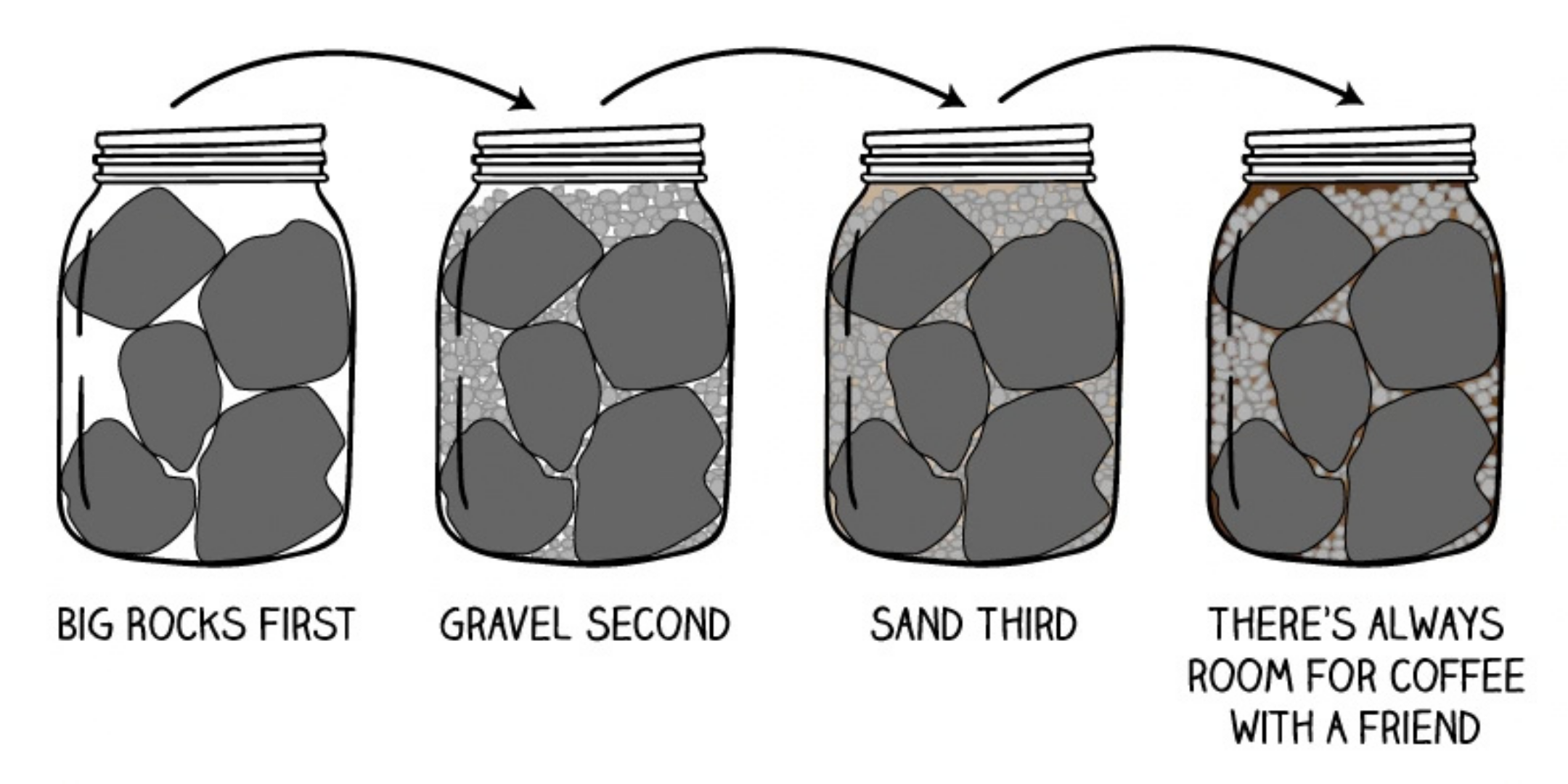
Imagine your next year is a jar. What are your priorities? Start by filling your jar with the biggest objects first.
Pull the lever
You do not need to throw away your watch or delete every tracking app. For some, the data is genuinely useful. The better question to ask before optimising anything is this: is this a big rock or a small stone? Have I pulled the major lever, or am I polishing the edges of something I haven't properly built yet?
For most of the people we work with, the biggest lever is not a better sleep score. It is getting clear on what they actually want from life and finding the courage to go after it. It is then, once that big rock is in place, that a better sleep score can begin to make a meaningful contribution to living a more fulfilling life.
And so, here are two questions I invite you to sit with:
Where am I currently majoring in the minors?
What big, uncomfortable decision am I circling instead of making?
Small details matter. But only after you have addressed the big ones. And the biggest one of all? Knowing what you are actually building towards.
Deepen Your Curiosity
If you are finding the volume of information today overwhelming and are questioning whether optimisation culture is the answer, Cal Newport and Brad Stulberg's episode of Deep Questions, The Optimization Paradox Explained - is a brilliant listen!
If you want to go even deeper, Brad Stulberg's The Way of Excellence provides a convincing alternative path to this hustle and optimisation culture.
