
Five Ways to Boost Your Energy
Summary
If you're slow to get going in the morning, hit a wall mid-afternoon, or lie awake feeling "tired but wired" at night, your cortisol rhythm is probably the culprit.
Cortisol isn't just a stress hormone. It's your body's primary energy management system. And when you learn how to work with it rather than against it, everything changes.
This blog breaks down five practical levers you can pull in the morning to elevate your cortisol peak and sustain your energy across the day: morning sunlight, hydration, caffeine timing, exercise and cold exposure. It also covers what to avoid in the evening to make sure your cortisol lowers in time for a good night's sleep.
Keep Reading
Do you struggle with low energy in the morning and throughout the day, or perhaps find that you lie awake at night feeling “tired but wired”? This is a strong signal that your cortisol rhythm could be dysregulated.
When I learnt how to work with my cortisol rhythm rather than against it, everything changed for me. I stopped running on fumes, no longer dragging myself through each day and meeting. I instead started to live from a place of elevated energy, clarity and focus.
What is cortisol?
Cortisol is best known (unfairly) as the body’s stress hormone. But cortisol’s role extends far beyond being the body’s stress hormone, it can be more accurately seen as the hormone of energy management.
First of all, we need to understand what a healthy cortisol rhythm looks like across the arc of the day. Essentially, we want our cortisol levels to rise and peak in the morning, and then taper down into the evening and before bed (as shown in the “normal curve” in the graph below). However, many people’s internal cortisol rhythm is closer to the “irregular curve” below, hence the low energy in the morning and the “tired but wired” at night.
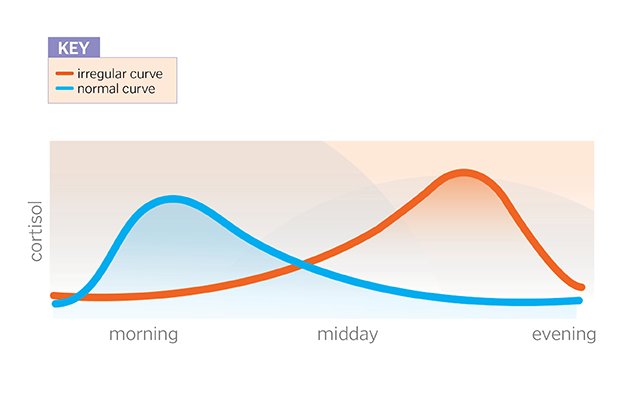
Our cortisol levels should naturally rise and peak in the early hours after waking - known as our Cortisol Awakening Response (“CAR”). We have a 1-2 hour opportunity window after waking to increase the height of that peak. The higher the peak in cortisol in those 1-2 hours after waking, the more energised we are in the morning and throughout the day, and the better our cortisol levels lower later in the day, resulting in better sleep.
So, how do we elevate that morning cortisol peak? By pulling these 5 key levers:
Morning sunlight
When the morning sunlight comes into our eyes, it clicks in motion our circadian rhythm and our cortisol levels rise. This behavior of morning sunlight exposure can increase our morning cortisol levels by 50%. How much sunlight do we need and when? We want morning sunlight into our eyes ideally within the first 60 minutes of waking. On overcast days, for 10-20 minutes, on clear, sunny days 5-10.
And what if I wake up before sunrise? Join the club my friend! I personally use a Lumie SAD Lamp in the first hour after waking, then when the sun has risen I get myself outside and worship that thing.
2. Hydration
Seems simple, but so often overlooked. We wake up slightly dehydrated from the loss of water overnight through breathing and sweating. We might not feel dehydrated, but we most likely are, and this morning dehydration leads to cortisol rhythm dysregulation.
250 - 500ml of water in the first hour of waking, perhaps with some added electrolytes (I use an electrolyte mix of c. 500mg sodium, 150mg potassium, 90mg calcium and 15mg magnesium), is great to replenish the body’s lost water and salts, to begin the day well hydrated.
3. Caffeine
Not everyone responds well to caffeine. But if you do, it is a really powerful tool which we can use to optimize our cortisol rhythms. Now, if you are a habitual caffeine user like myself (as in, you consume caffeine every day), the studies suggest that ingesting caffeine doesn't have a meaningful increase in your cortisol levels. However, what it does do, is prolong the effectiveness of the cortisol in our bloodstream.
So, consuming caffeine in the morning (ideally in the 60-90 minutes after waking), provides that almost immediate boost in alertness, focus and mood, and also lengthens the arc of our energy levels across the morning. Morning coffee is in my opinion one of life’s greatest pleasures, but it is also a powerful performance enhancing tool. But I am sure you don’t need me to encourage you to enjoy your morning cup of coffee.
4. Exercise
When we workout at the same time each morning, something quite magical happens. This stimulus of the consistent morning workout provides what is called an “entrainment cue”. Essentially, our body learns that we workout at this time and so it responds by ensuring our cortisol levels rise prior to the usual timing of the workout. This is our body’s way of priming our system to give us that anticipatory boost in energy.
5. Cold exposure
One of the most powerful tools available to us and something which has become a consistent part of my morning routine (as much as I dread it!). Cold exposure 2-3 times a week through a cold plunge or a cold shower (even 30 seconds provides a meaningful stimulus), results in a powerful increase in morning cortisol levels. Not only that, it also increases our resilience and capacity for managing stress.
Now, while we want to increase our cortisol peak in the morning, we want to ensure that it lowers in the evening so that we can enjoy a smooth transition into sleep. We can do that by:
dimming or turning off overhead lights in the home
putting our phone away 60 minutes before bed
avoiding caffeine in the late afternoon and evening
avoiding hard workouts close to bedtime
When nighttime cortisol is too high, morning cortisol levels are lowered, resulting in low energy in the morning and that all too familiar feeling for many of taking a long time to get going.
Through these small daily choices - morning sunlight, hydration, movement, caffeine and perhaps even cold if you are feeling brave - you too can elevate your mood, sharpen your mind and expand your daily work capacity. When you begin to feel this shift, it will be impossible to ignore.
That right there is the better version of you that has always been there, just waiting to be turned on. Are you ready to flick the switch?
Deepen Your Curiosity
Listen to this podcast from Dr Huberman to dive deeper into cortisol and your cortisol levels - How to Control Your Cortisol & Overcome Burnout - The Huberman Lab
Alternatively, if you’re short on time you could watch this great video explaining Dr Huberman’s morning routine recommendations.
