
Communicating with Impact: 5 immediately actionable steps
Communication is a skill. Skills can be learned
We all wish we were better communicators. We watch the confident, clear communicators in our company and on social media, and wonder how they make it look easy. Then, when our moment to speak up arises, we freeze and fumble for our words.
With the right techniques, that all changes. Here are five techniques our clients use to speak with more clarity, confidence and influence.
#1 Let your breath be your first word.
Before speaking in a high-stakes moment, take one breath. It calms your nervous system, holds you back from speaking too quickly and signals authority to the room before you've said a word.
Want to go further: try the box-breathing technique. If you practice this for two minutes before your next presentation, you will deliver more calmly and with more clarity.
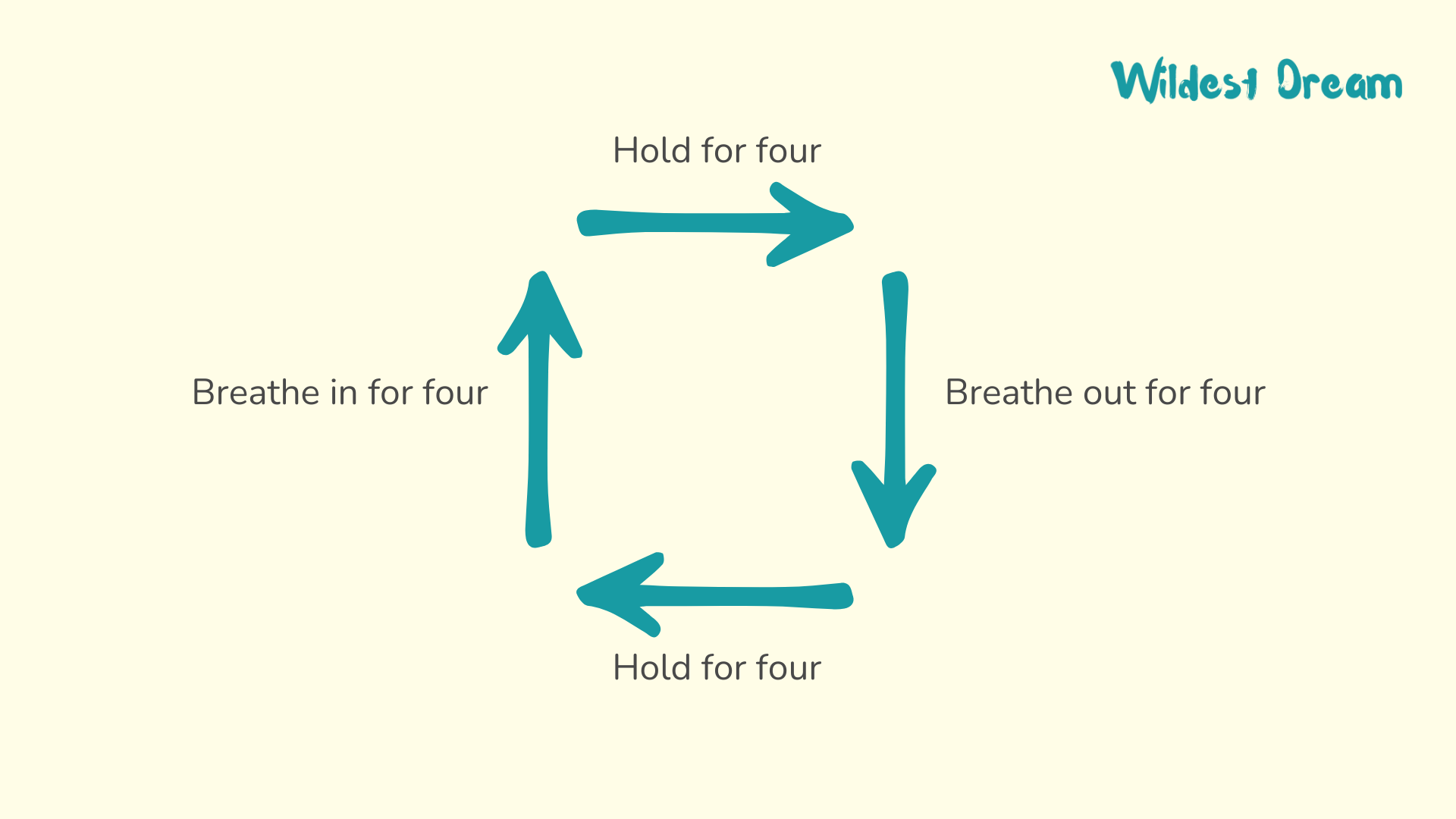
Box breathing: use this to calm yourself down before a presentation.
#2 Turn your presentation into a conversation.
"Look how polished I am" doesn't build trust. "Let's explore this together" does. Ask questions, invite responses, make eye contact. Talk with the room, not at it.
Understand more: there is a time and a place for a full-blown-performance, but usually it’s not the case. Too often we tend to move from presentation to performance, when in reality we need to move ourselves to a conversation.
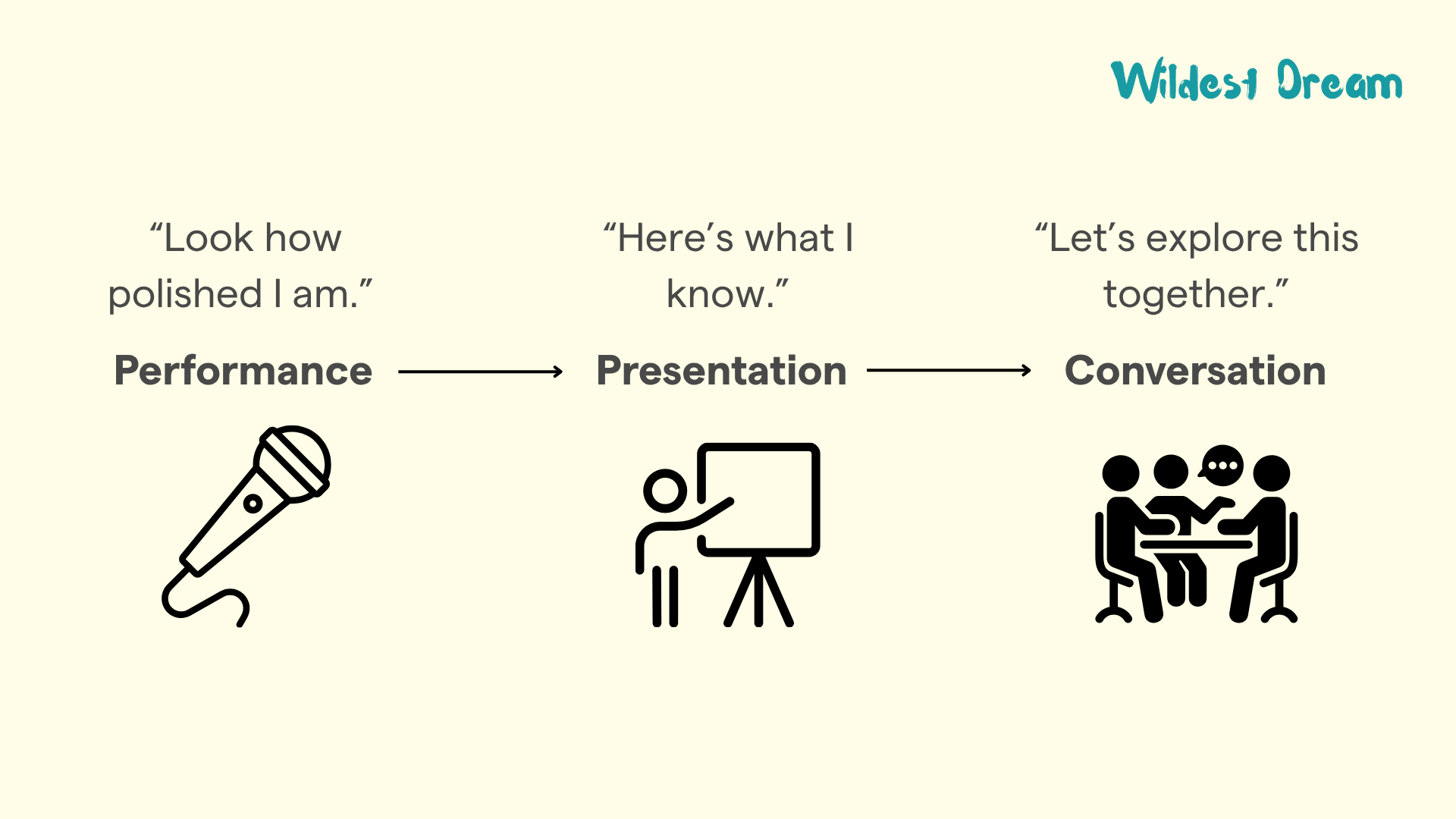
Stay on the right.
#3 Start with your point.
If you don't tell people what you're trying to say, they'll guess and likely be wrong. Distill your message into one sentence and open with it, then add context. Busy leaders and clients will thank you for it.
Try this exercise with a co-worker:
Choose a project you’re working on.
Take two minutes to explain it.
Now take one minute.
30 second.
Ten seconds.
One word.
#4 Notice your filler words.
"Um," "so," "kind of", “ahh” - these filler words bury even the smartest of ideas. In your next low-stakes meeting (best place to start), begin noticing when you reach for one. That awareness is step one to cutting them out. Then, try replacing the filler word with a pause instead (step 5 below).
Try this at home: record yourself presenting your next piece of work. Upload it into a platform such as meetgeek.ai and get the free transcript. Search for how many filler words you have used. A lot, right? Just being aware that you’re doing it, is a great place to start.
#5 Use the pause.
Silence isn't a gap to fill, it's a tool. A pause gives your audience time to process, builds anticipation and is a win-win alternative to those filler words. Remove the filler word, replace it with a pause and your credibility increases dramatically.
Top tip: if you want to go further, pair the pause with some hand gestures. Here are two options:
Pausing for a question: put your hands out in front of you with your palms up in the air. This signals that you’re open to a question.
Pausing for emphasis: hands out in front, but palms down this time. This signals confidence, clarity and absolutely no questions, thank you.
Feel the fear and do it anyway.
We understand, it is scary, we get nervous speaking up in front of people too. It is completely normal, human reaction. But none of this works without practice. Courage comes after action, not before. So next time the nerves arise, don't wait to feel ready - step up anyway. Apply these techniques, adapt, learn, improve. The more time you spend in the arena, the more confident a communicator you will become.
The final word on communication
It’s a skill. Skills can be learned.
If you want your team communicating like this in every internal and external interaction - then download our pdf which you can forward onto your teams. In this guide, they will find five tips on how to improve their communication at work.
