
Ikigai - Your Reason for Being
Summary
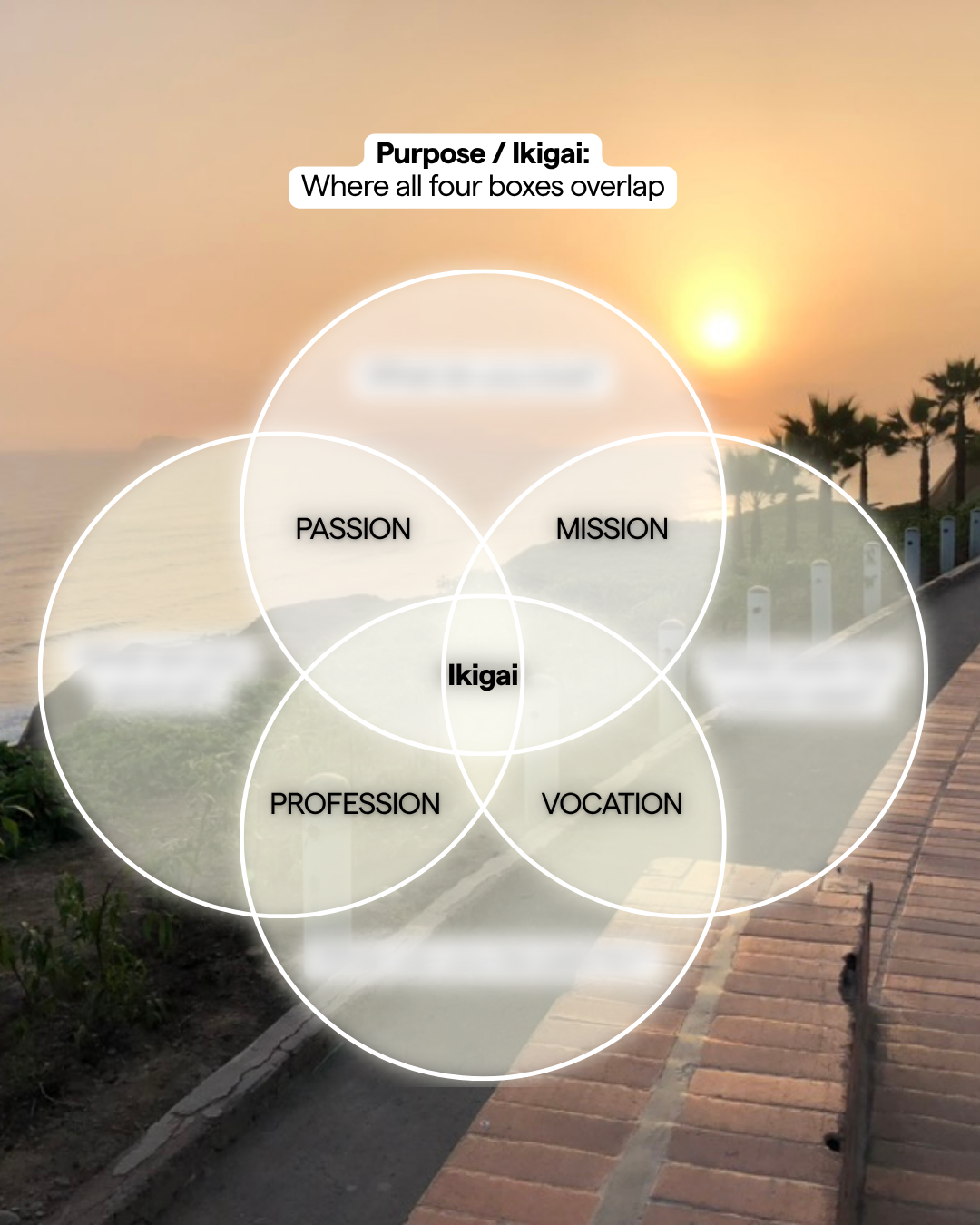
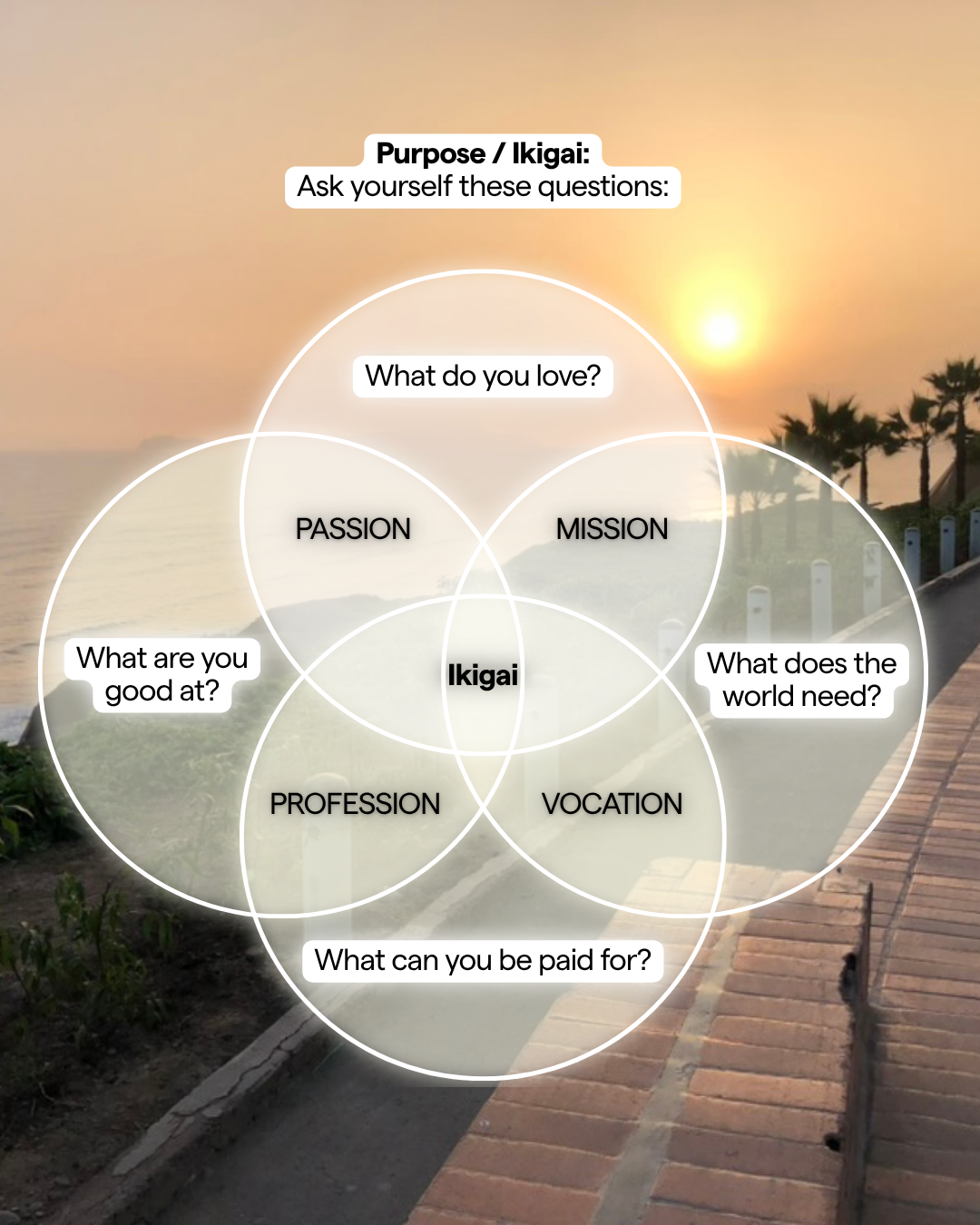
Ikigai is the Japanese concept for purpose. It means “reason for being” and it is found at the intersection of what you can be paid for; what you’re good at; what you love; and what the world needs.
Four lessons to find your Ikigai, your purpose:
Lesson 1: don’t turn your nose up at someone who earns just to make money. Sometimes they’re just 15, and sometimes they need to put food on the table.
Lesson 2: when you’re in your 20s you are emotional and have strong instincts. Trust them. Follow your gut.
Lesson 3: if you’re reading this and you’re around 30, this is the most important point. Don’t get trapped into thinking that finding a profession that you’re good at is enough. Remember, you have one life, so why waste it doing something you merely ‘like’.
Lesson 4: don’t overthink this. The main thing that is going to change your life is getting on the journey of self-discovery, not the destination itself.
Keep Reading
When I was a teenager, I collected rubbish around the villages where I grew up. It wasn’t particularly fun, but it was something I was good at, and more importantly, I got paid well.
I imagine the person who decided the wage was about 60, worked for the village council, walked around the villages in three hours and thought: I’m sure a 15 year old would be happy with about £20 for that.
£20 for three hours work wasn’t bad. Especially when the village council weren’t considering that a fit 15 year old would be doing it. Within an hour I’d be done, I’d have the £20 in my pocket and I’d be off to the bus to meet my friends in town.
Did I get a real kick out of cleaning up the village? Hell no. I was 15! I got a kick out of having an extra £20 note in my pocket!
This is what I want to talk to you about today. That journey from working for cash to working for something bigger - your reason for being.
The Japanese call it Ikigai - in the west we call it purpose - and I’ll use their famous framework to walk you a couple of steps to finding your own Ikigai, or purpose.
Lesson 1: don’t turn your nose up at someone who earns just to make money. Sometimes they’re just 15, and sometimes they need to put food on the table.
What are you good at?
I’m good at analysing numbers, communicating messages and building relationships. It’s not really a surprise then that I ended up consulting then working in a global strategic role for a corporate.
Did my choices make sense at the time? Nope. But then again, not much makes sense when you’re in your 20s. But what does make sense? Your intuition, your beliefs, your opinions, your sense of what you enjoy.
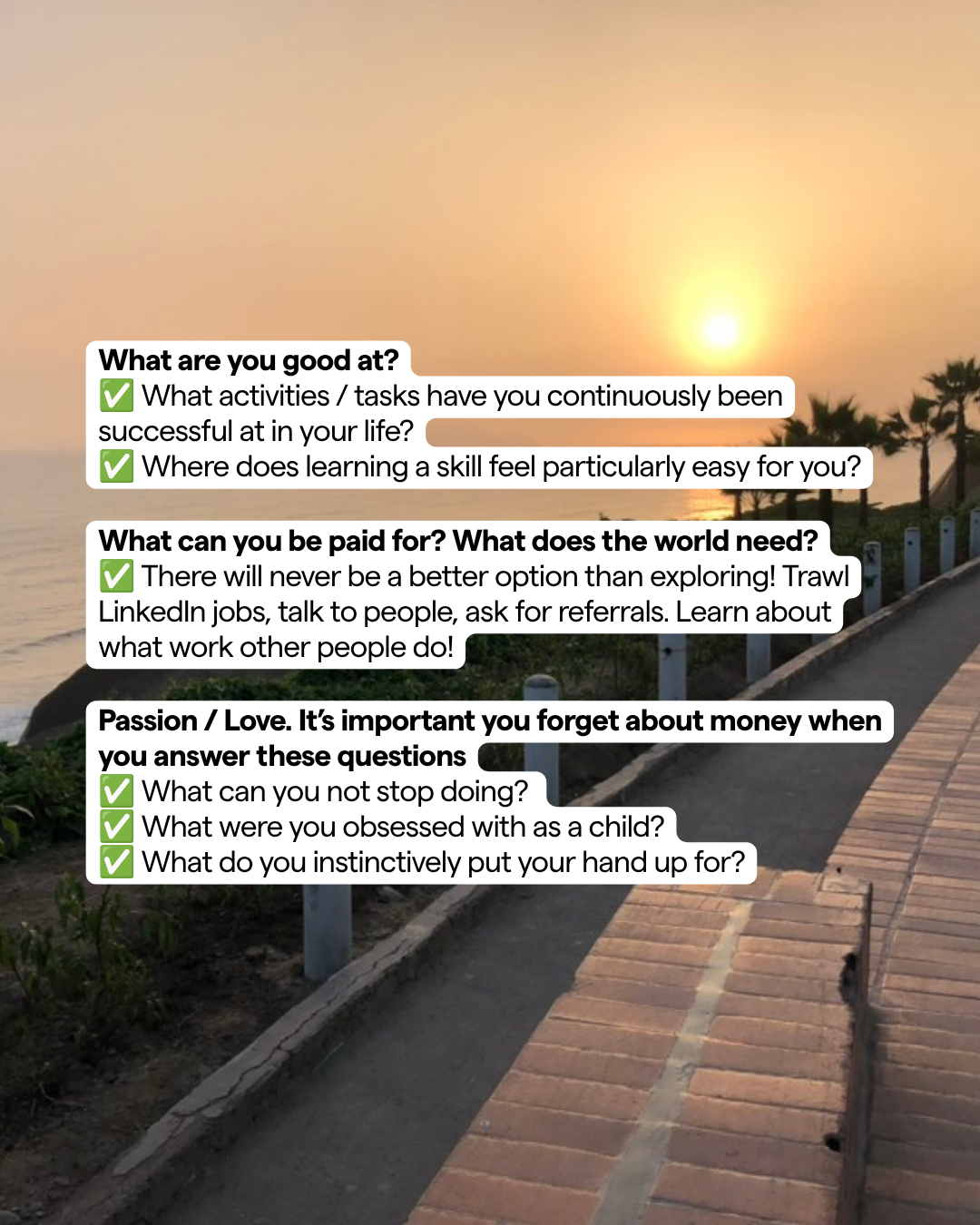
So, if you’re interested in stepping towards a more purposeful life, start here: figure out what you’re great at. I’d recommend you jot down some answers to these two questions:
(1) Where have you consistently had success in your career so far?
(2) Where does learning and growth feel very ‘easy’ to you?
Lesson 2: when you’re in your 20s you are emotional and have strong instincts. Trust them. Follow your gut.
What do you love?
Pat wrote last week about passion. It’s the key ingredient to moving from a life of ‘getting by’ to one of thriving. From my own experience, once you find what you love, you’ll stop resenting Sunday night, you’ll sleep better and you’ll generally become a better human being.
It’s genuinely hard to find your passion, but you must search for it - here’s a few reflective questions to do that - and please, forget about money when you answer them:
(1) What can you not stop doing?
(2) What were you obsessed with as a child?
(3) What do you find yourself putting your hand up for when no one else does?
Once you’ve got your answers, look for the threads across them, they will point towards a passion.
Lesson 3: if you’re reading this and you’re around 30, this is the most important point. Don’t get trapped into thinking that finding a profession that you’re good at is enough. Remember, you have one life, so why waste it doing something you merely ‘like’.
What does the world need?
This week I watched a couple of episodes of Stanley Tucci in Italy. It’s essentially a tour of the country where he meets passionate Italians to talk about food. At several points in the series I got goosebumps just by watching other people live life to their absolute best. In one scene, a priest converts an old monastery into a self-sustaining farm that rescues animals and pays disabled people to work there. He was in tears as he explained to Stanley that his mission is to help those in need through food.
Your mission is to find your mission. It’s the final piece of the puzzle, the entry route into your Ikigai, your purpose.
How to do it?
It’s tough - but this one is going to take time and I can’t tell you how. But I can tell you how to look for it:
(1) Get outside in the real world - your mission will not come and find you - you have to actively look for it
(2) Do the work - it’s not easy to live in uncertainty of what your purpose is - it’s much easier to stick to a profession and think, ‘this is good enough.’
(3) Don’t worry about everyone else - everyone around you might not be looking for something special to do with their life, that’s ok, but it doesn’t mean you have to.
Lesson 4: don’t worry too much about this. The main thing that is going to change your life is getting on the journey of self-discovery, not the destination itself.
So that’s it - Ikigai. It’s your reason for being. Send me a DM on Instagram if you’d like to chat about it. If you’re ready to go further and do the work, check out WD PRO - workshops designed to guide you through this process.
Deepen Your Curiosity
Read Ikigai by Hector Garcia and Francesc Miralles. Yes, it’s kind of weird that it isn’t written by a Japanese author, but they do a great job of bringing the concept to a more western audience.
Figure out what you’re good at by either investing in a Clifton Strengths Assessment or reading Marcus Buckingham’s Go Put Your Strengths to Work.
What does the world need? Subscribe to Fix the News on Substack - it will bring boundless positivity into your life.
What are you passionate about? Explore and watch documentaries to get inspired by other peoples stories.
