
Summary
We think keeping our options open is what’s best for us, but it’s often what holds us back:
More choice feels like more freedom, but it often leaves us paralysed and doing nothing
We’re happier with decisions we can’t take back than with the ones we can
Potential only becomes real when we commit to something and close the other doors
Five real commitments you can make and the doors they close
My Saturday Night
On Saturday night, I had an evening in. Majd (my wife) is away, so no Ted Lasso until she’s back. So many options. What should I watch?
How about The Dynasty, the new Amazon Prime documentary on Tom Brady and the New England Patriots? Five minutes in, another thought popped up.
There’s a new season of Black Doves on Netflix, isn’t there? Over to Netflix for some Keira Knightley and Ben Whishaw.
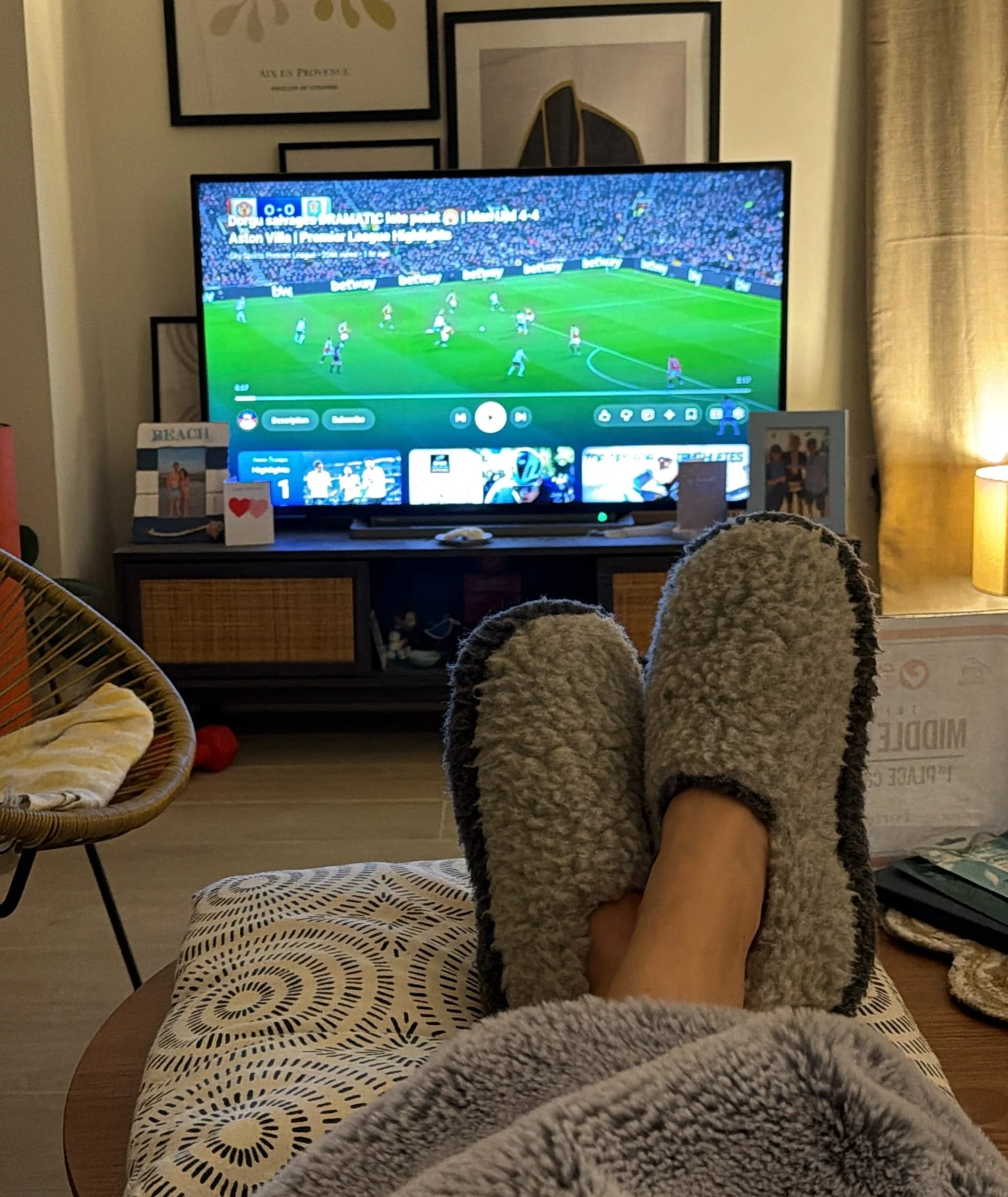
Anyone else find it very hard to choose what to watch each evening? (don’t mind my slippers!)
Five minutes in, I decided to save it for when Majd was back. Then I remembered I’d never watched the Arsenal highlights from our game against Hull.
Midway through, I was reminded that it wasn’t a great game. And hadn’t I seen an advert on a London bus for that new Oasis documentary on Disney+?
Forty-five minutes later, I went to bed oddly dissatisfied. Four streaming services. Tens of thousands of hours of content. And I hadn’t enjoyed a single minute of any of it.
We believe having more options available to us is better. Whether it’s what to watch on a Saturday night, what to do next in our career or which goals to chase - more choice feels like more freedom. But, as my Saturday night proved, this is an illusion.
The Jam Study
In 2000, psychologists Sheena Iyengar and Mark Lepper set up a tasting stall in a Californian supermarket. On some days it offered 24 jams. On others, just 6.
The bigger display grabbed more attention. Around 60% of shoppers stopped at the 24-jam table, versus 40% at the smaller one. But of the people who stopped at the small table, around 30% bought a jar. At the big table? Just 3%.
More choice drew people in, then left them paralysed. Later research shows this effect is strongest when options are hard to compare and we’re not sure what we want. Which sounds a lot like our twenties and thirties.
Why We Love Keeping Our Options Open
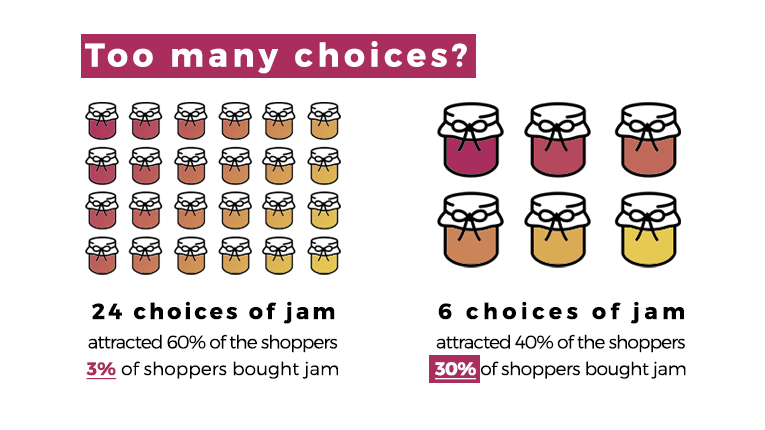
More options available and fewer people committed to making a purchase.
From early on, we’re told to "keep our options open". Pick the degree that gives you options. Get the qualification that means you can "do anything". Don’t specialise too soon.
That’s not bad advice. In a world being disrupted by AI, the ability to pivot in your career is incredibly important. The problem arises when it’s time to choose a goal or a particular path in life. We end up standing in a corridor full of open doors, afraid to step through one in case we close the others.
Optionality feels safe. But it costs attention, energy and time - scarce resources in our busy lives.
The Happier Choice Is the Final One
Harvard psychologist Dan Gilbert asked photography students to print their two favourite pictures and keep just one. Half were told the decision was final. The other half could swap over the next few days.
You’d assume the second group ended up happier. They didn’t. The students who could change their minds liked their photo less. The ones whose choice was locked in grew to like theirs more.
The kicker? When asked in advance, most people say they’d prefer the option to reverse. We think we want the safety net. In reality, we’re happier without it. The origin of the word "decide", after all, comes from the Latin decidere, meaning "to cut off".
Commitment Is Where Potential Lives
We keep our options open because we think it protects our potential.
But potential only becomes real when you commit to something long enough to get good at it and to let it change you.
That’s what we help our community do at Wildest Dream. The clue is in the name - it’s not your wildest options, it’s your wildest dream. And a dream only becomes real once you commit to it.
What Closing Doors Actually Looks Like
This might sound nice but a little intangible. So here are some examples of real commitments you could make and the doors which they would close.
1. Pick one big thing for the next 12 months
When I left PwC to go all-in on coaching, I closed the door on a career I’d spent over five years building. Terrifying, but we couldn’t have built Wildest Dream if I still had one foot in audit.
The door you close: the "maybe I’ll also..." side projects that are really just distracting you from the main thing.
2. Put the date in the diary and pay the entry fee
Signing up to my first Ironman is what made me consistent in my training. A start line makes decisions for you.

Making the commitment of signing up to the half-ironman with my sister ensured I was consistent in my training.
The door you close: some big nights out, a few lie-ins and the comforting story-line that you’ll "start properly next month".
3. Choose your people
Commit to a handful of friendships and show up for them, whether that’s a recurring dinner or a monthly coffee.
The door you close: being vaguely available to everyone and properly there for no one.
4. Commit to where you are
"Maybe I’ll move to Lisbon next year" stops you building a life where you are. Make concrete plans to move to Lisbon or join a run club, learn your barista’s name and get involved in local community events.
The door you close: the fantasy life that’s always somewhere else.
5. Say no to good opportunities
Saying no to things that clearly have no value is easy. Saying no to good things that aren’t your thing is much harder.
The door you close: the people-pleasing yeses and the overloaded calendar that comes with it.
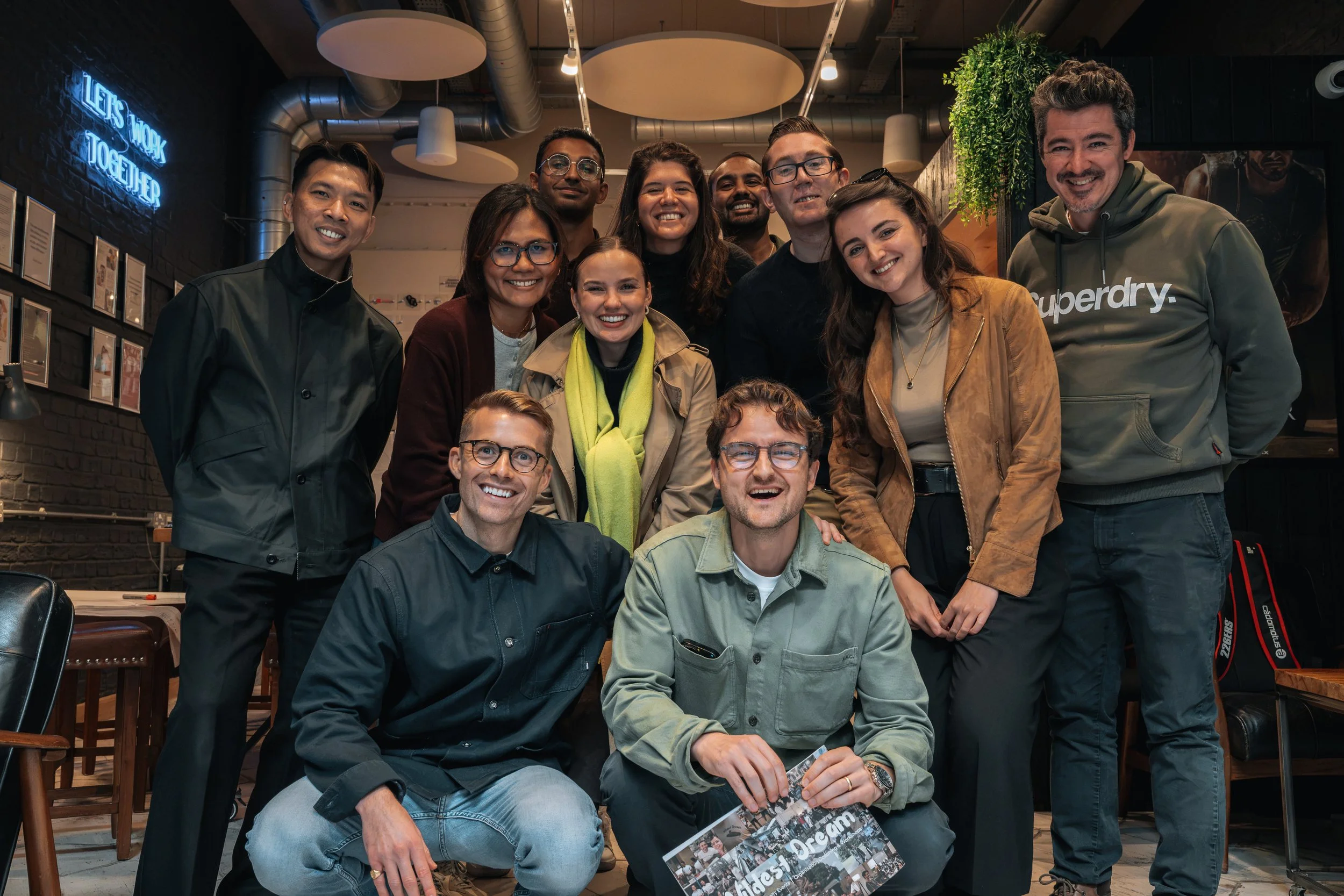
Our WD community members commit to who they want to become and the life they want to live - that is where lasting happiness and fulfilment is found.
Fewer Doors, More Life
None of this means never changing your mind. But reopening a door should be a deliberate choice - the exception, not the rule.
In my own life and in the people we coach, the most fulfilled people aren’t the ones with the most options. They’re the ones who chose a direction, closed some doors and went all in.
That’s what pursuing your Wildest Dream is really about. Not doing everything, but choosing the right things and giving them your full energy. Because it is only when we make commitments and limit our options, that we can really begin living.
Over To You
What options are you keeping open "just in case" that are actually keeping you stuck?
If you committed fully to one thing for the next 12 months, what would it be? And which doors do you need to close?
Deepen Your Curiosity
Barry Schwartz’s TED talk The Paradox of Choice - a short, funny watch on why more choice so often leaves us less satisfied, from the psychologist who wrote the book on it.
Dan Gilbert’s TED talk The Surprising Science of Happiness - where he walks through the photography study from this blog and what it tells us about how to find happiness in the choices we make.
