
Summary
“I’m glad Pier agreed to meet with me!” I thought to myself as I listened to my old business school professor talking about Pixar. As part of his research area he’d recently interviewed Ed Catmull, the co-founder of the animation studio that has given us Toy Story, Ratatouille and Finding Nemo. When I first reached out, I wasn’t sure if he would respond - but he did and was kind enough to meet up for an espresso in Milan.
It turns out that he subscribes to the same belief as me: you don’t need an express reason to meet up with someone you find interesting. So there we were, no agenda, no time limit and just chatting. In this blog, I will summarise what I learnt from Pier about creativity - his area of expertise - and a process you can follow to bring more creativity into your life.
You are creative
At school I was never told “you’re uncreative,” but I knew that creativity meant being good at art, drama or music. I always did well in maths, science and history - so year after year, these creative subjects dropped off my radar. Heading to university to study economics then mastering in business, I learnt formulas for economic growth, charts for supply and demand, and graphs for business strategy that explained how the world works. Sat across from a world expert in creativity, I reflected with Pier on just how narrow minded my 18 year old brain was - narrow in the sense that I’d believed what I’d been taught.
Coming up with a solution for an angry supplier, or managing a disgruntled intern just wasn’t explained by any of the charts I’d memorised. As the years passed, I started to lean less on my education and more on my gut instincts. At first I wasn’t confident, but over time as suppliers and interns became happier I realised I good at it. What I realise now is that in all those moments I trusted my instincts, I was being creative.
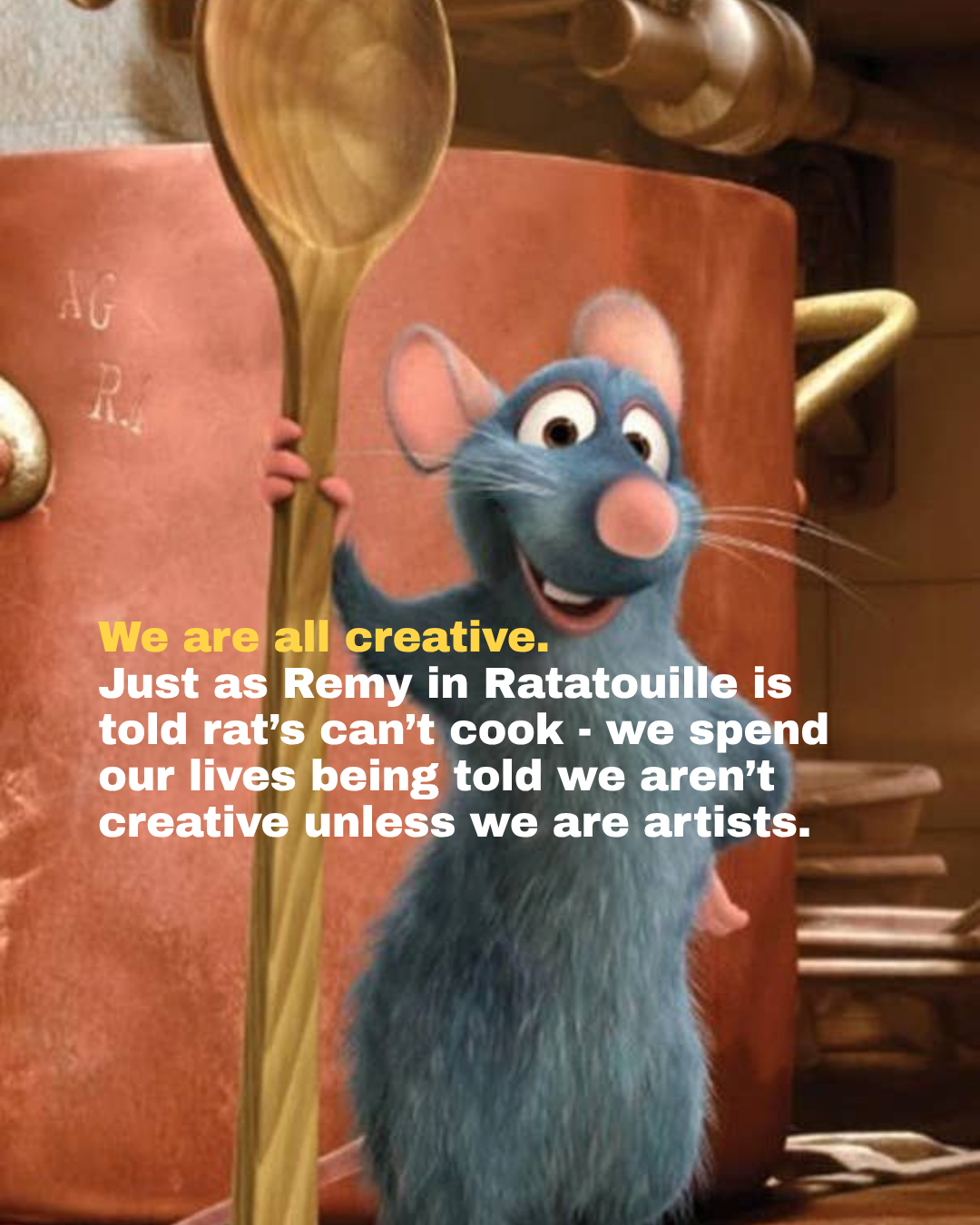
Creativity, according to Pier, is “strategies and techniques for producing ideas that are original and useful.” He explained that the second part - useful - is so important for us to understand. Just because you painted a beautiful landscape, it doesn’t mean you’ve done something creative if it isn’t useful to anyone.
When we expand our definition to include usefulness, we can see that we are all creative, all the time. Instead of going food shopping last night, I rooted through our food cupboard and created an impromptu meal. I’d never made a tasty (useful) dish of crispy polenta with curried chicken (original). We were all creative during Covid when we had to rearrange our lives, careers and childcare to exist from home rather than the office. Creativity.
What’s more, creativity is critical to your very existence. Imagine if you didn’t have the ability to invent a meal, reorganise your life, or even decide what to wear in the morning when the weather changes - we’d probably still be living unhappily in caves.
Original or useful first
I’m going to guess you now use AI everyday of your life. I will also guess that you’ve been frustrated to ask it a question (what to eat for dinner) and get a generic response. The reason for that is AI works by taking the world’s information, averaging it out and giving a response it thinks you’ll like. It’s never going to give you crispy polenta with curried chicken.
I really believe this: the more that AI relentlessly marches into our lives, the more those who unlock their creativity will surge ahead of the crowd. This is because AI moves to the average, so those who can be more original will become increasingly rare, and therefore valuable. For us at Wildest Dream, being valuable to your community, to society, and to the world is a critical ingredient to living a meaningful life.
So how should we approach being more creative? When I think about the definition, I see two entry points to bringing more creativity into our lives: being original or useful. To me, leading with originality is Steve Jobs unveiling a new category of product - the iPhone - on stage in 2007.
I’ve written about what we can learn from Steve Jobs here. But for the rest of this blog, I’m going to take usefulness as the entry point because I believe it is the more accessible and less risky option. Think of original as an iPhone and useful as Samsung releasing a more affordable smartphone. Samsung were still creative, but it started with usefulness as it addressed the question of “how do we make something like the iPhone more affordable?” They ended up with an original solution, but they came at it from another angle.
(1) Start with the problem you’re trying to solve
It sounds silly but being crystal clear on what you’re trying to solve is the first step people often skip. Ask yourself, when you’re asking your boss for a promotion if:
The promotion will mean a different scope and is better suited to you than your current job?
You’re asking because you need more money because your rent increased?
You’re sick of your current manager and actually anyone else will do?
You need more opportunities for learning and growth?
You get the point, you will have many motives for the solving the problem, but being clear on it will help guide your later solutions.
(2) Learn from others
It might not surprise you to learn that millions of people have come before you with the same problem. These people have written books, spoken on podcasts and probably even sat next to you in the office - talk to them, share your problem and learn what worked (and didn’t work) for them.
(3) Loose connections double your creativity
Once you’ve scoped your problem and you’ve got Ideas about how to approach a solution - I want you to spend time with your loose connections. Research carried out by Pier has shown that we are significantly more creative when we spend time with people we don’t know that well. It makes sense, our closest friends and family know our problems well, have suggested solutions before and are altogether a bit biased (no offence!).
Trust your own creativity
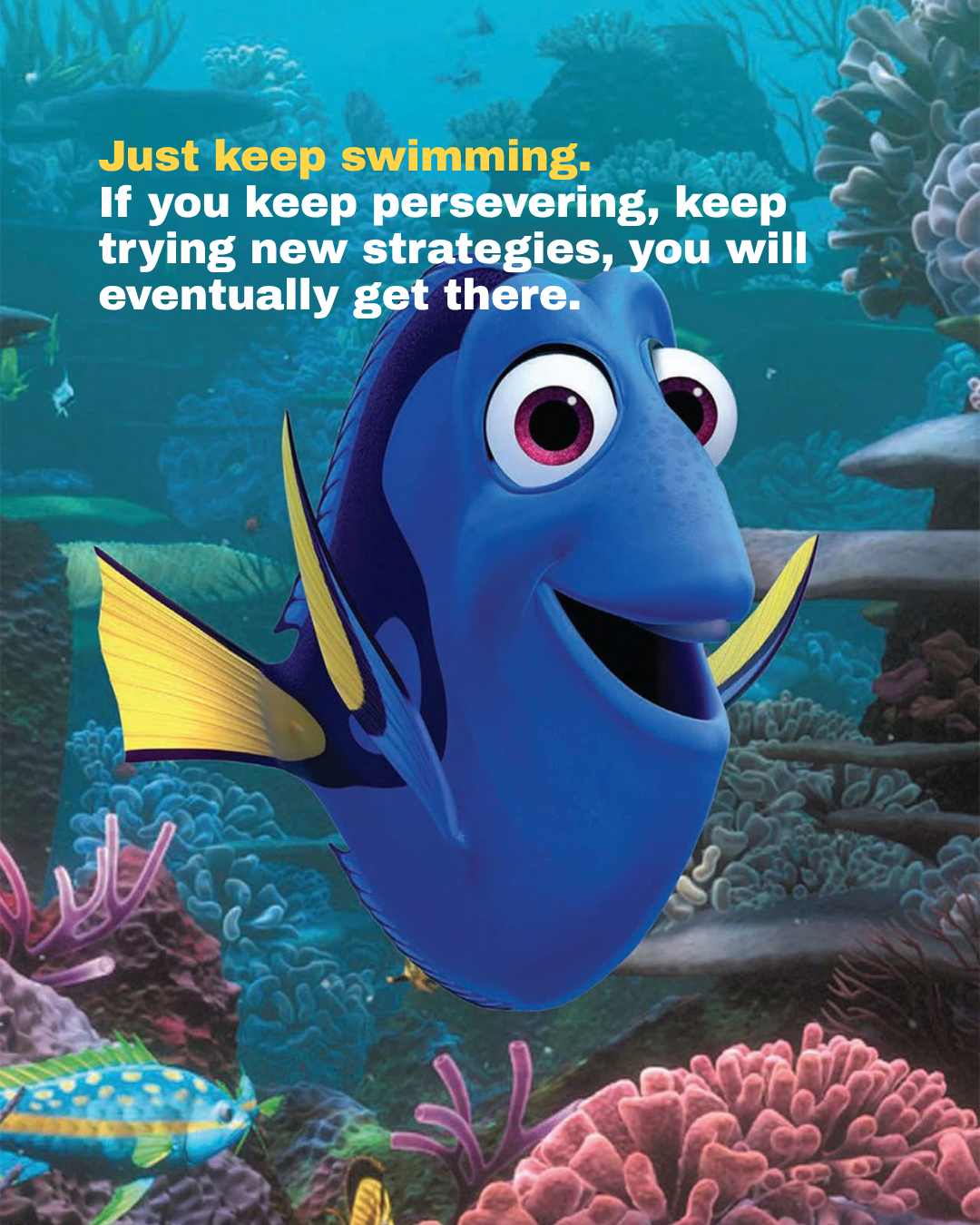
The dark art of the successful creative is that they have skin thicker than a Komodo dragon. They get things wrong all the time, they get knocked down more than anyone else, but critically - they get back up. As a business founder, I am slowly realising that the more good things we do the more mistakes we make. Thats the whole point of starting something and being responsible. It’s not a bug, it’s part of the process.
Finally, I urge you to trust yourself. Despite what the world tells you, trust yourself that you are and always have been creative. Trust yourself that being creative will bring more value both into your life and the world at large. When you do this, you will start to feel like you’re living more meaningfully. At times it will feel like a tough road, you will feel like your problem solving keeps coming up with useless and unoriginal solutions, but if you keep persevering, keep trying new strategies, you will eventually get there. So, to follow the advice of one of Pixar’s greatest creations, Dory: “just keep swimming.”
Deepen Your Curiosity
Check out our Roadmap and Companion Guide which will guide you through setting goals for 2027 - a process which requires a lot of creativity.
Ed Catmull’s Creativity Inc. is a wonderful book for those wanting to be more creative within a corporate structure.
If you’re interested in Pier’s research, please check out his faculty page for his latest research and publications.
