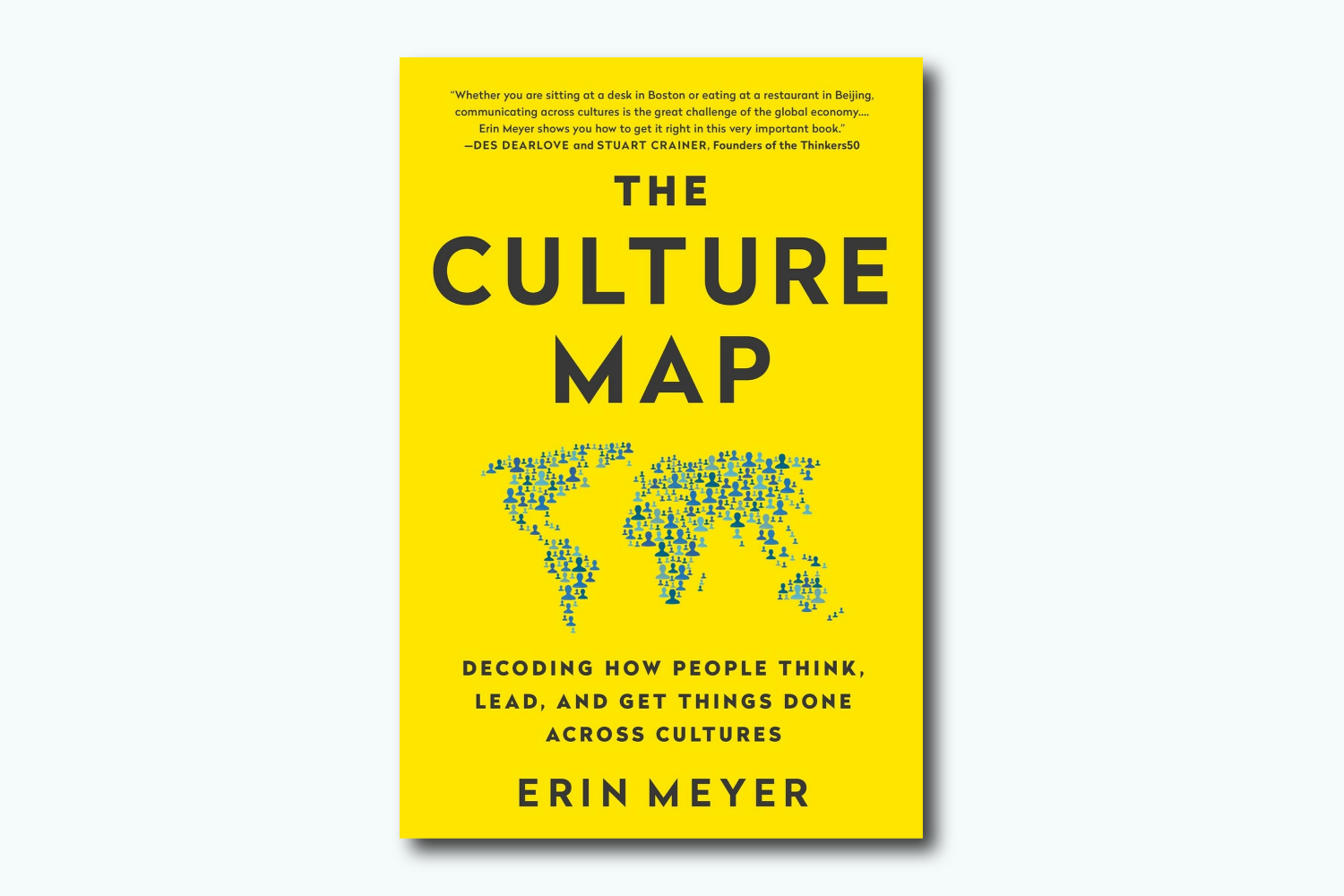
The Culture Map by Erin Meyer
JACK’S TAKE
I picked this book up four years after I should have done. If I’d had it at the start of my corporate career, I would’ve been able to understand my colleagues, bosses and teams even better because I worked with people from a range of nationalities.
If you read this book, you will have a-ha after a-ha moments, thinking to yourself, “that’s why that conversation went the way it did!”
What it's about
Erin Meyer does such an excellent job of breaking down where different countries sit across multiple dimensions of cultural difference and most importantly, how you can bridge those differences.
Meyer has eight dimensions: Communicating, Evaluating, Persuading, Leading, Deciding, Trusting, Disagreeing, Scheduling. Take the first dimension, Communicating - countries sit on a scale of low context to high context. When I worked in the UK, the majority of people got things done more independently without a whole lot of context sharing. When I moved to Thailand it was the opposite. My team would do a fantastic job of sharing context with other departments before moving forward with a decision.
She calls them cultural dimensions, I’d argue you can also call them values:
They are the fundamental beliefs you have about how the world works.
Countries such as Thailand value high amounts of collaboration and sharing, whereas countries such as the UK value high amounts of independence.
KEY IDEAS
① Just because your country does it that way, it doesn’t mean it’s the only way. Meyer recounts a meeting where a Chinese executive said, “you have two eyes, two ears, but only one mouth. You should use them accordingly.” In the UK we value having our voice heard, in other parts of the world they value hearing other voices.
② Bridging cultures starts with upfront communication. We all work in cross-cultural teams now. Several team members might prefer direct negative feedback, whereas others prefer indirect negative feedback. As a leader, you have to be upfront and communicate to your team that you lean more one way.
③ Having clashing values doesn’t mean we can’t get along. When we are a team made up of a diversity of individuals, we have to put in work upfront to understand each other so that we can have empathy for each other when the going gets tough.
④ Credibility versus affection. We all value trust, it is our human instinct. However, we often go about it in different ways. Countries such as the USA place more weight on credibility (degrees, job experience) whereas countries such as Italy place more weight on affection (how has that person treated you).
“To engage in conflict, one does not need to bring a knife that cuts, but a needle that sows.”
MAYBE SKIP IF
You tend to just work with people from one country.
You’ve never really had challenges working across cultures.
WHO THIS IS FOR
Someone who works in an organisation with a multi-cultural staff.
You have an upcoming assignment in a different country.
You want to expand your horizon in terms of ‘what normal is’.
You like self-help books with a scientific backing.
EXPLORE MORE OF OUR RECOMMENDED BOOKS FOR FUTURE LEADERS