
Actions to change your team’s relationship with stress
Most teams think about stress the wrong way round.
They wait until someone's overwhelmed, then reach for a fix - a duvet day, a wellbeing app, a "let's check in" chat. Useful, sometimes. But the mistake in this approach is to see stress purely as something to be managed once the water level overflows, not as something we can actively build capacity for in advance.
The Stress Bucket
And so, here's a better way to think about it: everyone on your team has a bucket. Stress is the water. The bigger the bucket, the more stress someone can hold before they overflow and become overwhelmed.
A small bucket means minor annoyances - a blunt Slack message, a meeting running over, an unexpected ask - can tip someone over the edge. This team member is already overwhelmed by these small stressors, before they can even begin to think about leaning into the productive kind - the stretch assignment, the hard but necessary conversation, the project that will actually enable them to grow.
A bigger bucket changes the game entirely. These same annoyances barely register. There's then so much more room for that individual to take on, and rise to, the positive stressors that result in great work and actually lead to growth, for the individual and the company.
So the better question for leaders to ask isn’t "how do we protect our team from stress?" It's "how do we grow the size of their buckets?" Here's how we help our clients do it.
#1 Deliberately raise the threshold, don't just manage the moment
Most organisations stop at in-the-moment tools - a breathing exercise before a big meeting, a walk after a tough call. These matter. But they only help someone cope with the water that's already in the bucket. They don't make the bucket bigger.
To do that, your people need controlled, deliberate exposure to discomfort - what we call Stress Threshold Raising Activities (STRA). A hard workout. A cold shower. Volunteering for the stretch project before they feel ready. Done consistently, these expand someone's actual capacity to hold stress, they increase the size of the bucket and raise the threshold.
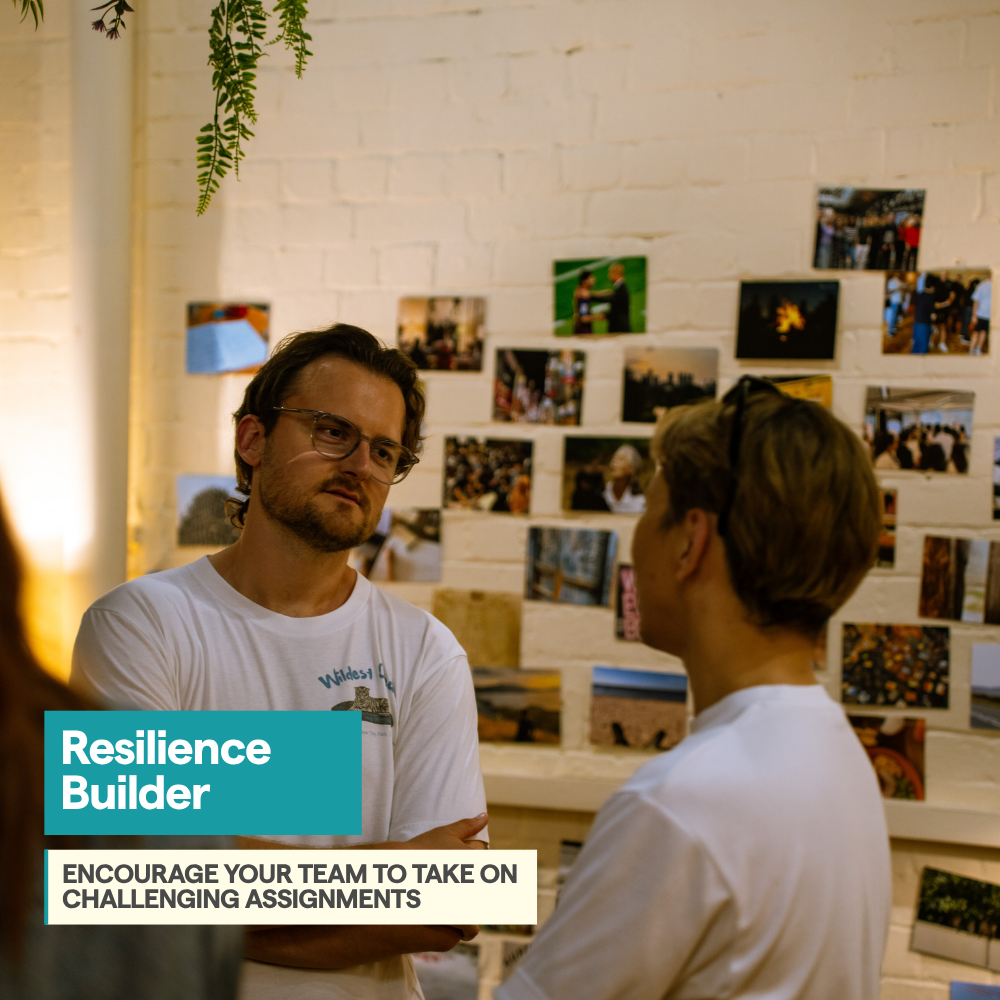
Encourage your people to build one STRA of their choice into their week - not just as an extra task on their to-do-list, but as training to raise their threshold.
#2 Reduce exposure to what shouldn't be in the bucket at all
Not all stress deserves a place in the bucket. Late-night emails, meetings that overrun, unclear priorities, constant pings - none of this builds anyone. It just fills the bucket with water that serves no purpose.
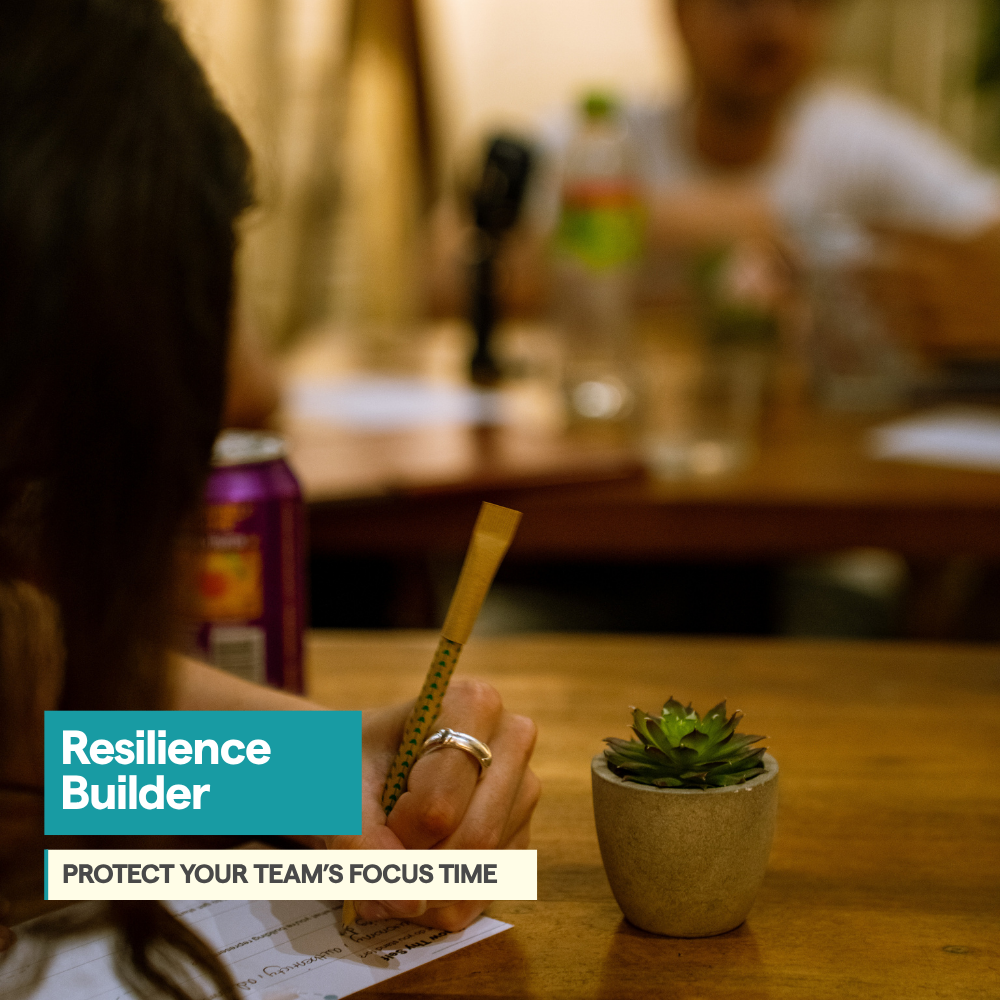
Get ruthless about identifying and reducing the exposure of your people to these unproductive stressors. Protect their focus time. End meetings on time. Set clear priorities so people aren't burning energy guessing. Every drop of unproductive stress you remove, provides more space for your team to lean into those productive challenges.
#3 Work with energy rhythms, not against them
Here's what most leaders miss: the size of someone's bucket isn't fixed all day long. It flexes with their energy, shrinking and expanding as energy decreases and increases. Energy naturally rises and falls in cycles throughout the day - most people have a window where focus and capacity peak and a dip a few hours later where neither is in the same supply.
When we ignore this and schedule the hardest conversations, the trickiest decisions and the highest-stakes meetings without any thought for where people are in that cycle, we're adding water into a smaller bucket.
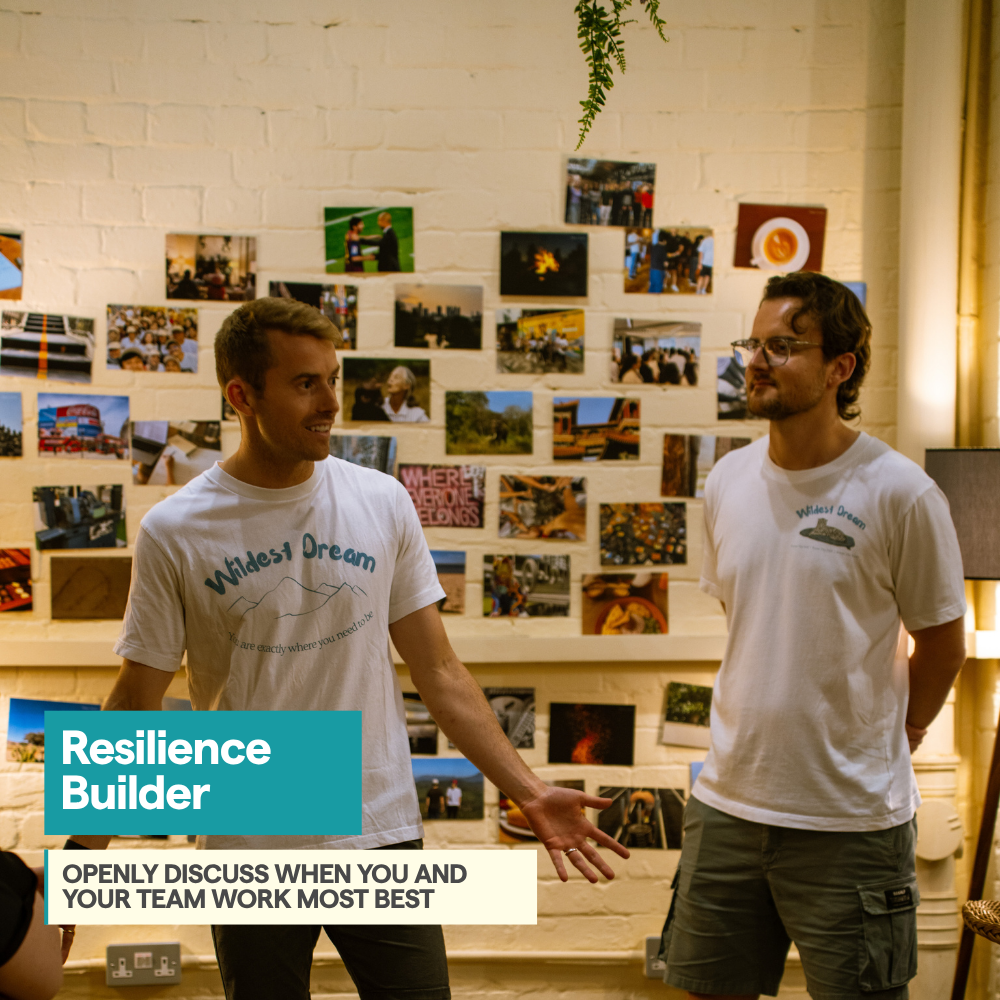
Get your team talking openly about when their energy and focus peaks and dips, then build the calendar around it. Protect peak windows for the work and conversations that need real capacity. Push lower-stakes, administrative work into the dips. A team that works with its energy rhythms is, in effect, working with a bigger bucket - because the demands now match the collective capacities available to meet it.
If you want some specific, actionable steps for you and each of your team members to increase daily energy - check out this blog we wrote.
The final word on leading in high stress environments
Here's the thing about our buckets: nobody else can see the real size of someone else's. As a leader, you won't always know which of these three levers a given person on your team needs most and you don't need to guess. Ask them. Build the habit of checking not just what's on each of your team member’s plates, but how much capacity they've got left to take it on, that is - how full their bucket is.
If you’re interested in how we help teams build resilience, get in touch.
