
The New Science On Coffee
Summary
Coffee has incredible health benefits - from boosting focus and memory to improving your gut health. However, there are a few important things to consider when it comes to your caffeine intake: experts recommend having your final cup 8 - 10 hours before bedtime, keeping consumption to 2 strong servings a day, and watching out for added sugars in caffeinated drinks. We also share a simple caffeine protocol at the end to help you maximize the enjoyment and performance benefits from your coffee habit.
Keep Reading
“Coffee?” I turn to see Majd’s grandmother holding out a tray of Turkish coffee, accompanied by her warm, inviting smile.
“No thank you,” I reply in perfect Arabic. I suddenly feel a sharp nudge in my ribs. I turn to Majd. She gives me a look that clearly translates to: “My grandmother is not asking you a question. You are having some coffee.”
“Sorry, yes please,” I correct myself, smiling as I take one of the cups. I glance at my watch before taking a sip. 10:00 PM. Fantastic. That’s me up all night.
Coffee: Friend or Foe?
Coffee is something many of us feel we can’t live without - myself very much included. But it’s often portrayed as something harmful, largely due to its systematic around-the-clock overconsumption.
But recent research into coffee and caffeine is producing some fascinating insights that might just change how you think about it.
At the end, I’ve shared a few simple guidelines to help you get the most out of your caffeine habit - whatever your relationship with coffee looks like.
Performance Benefits
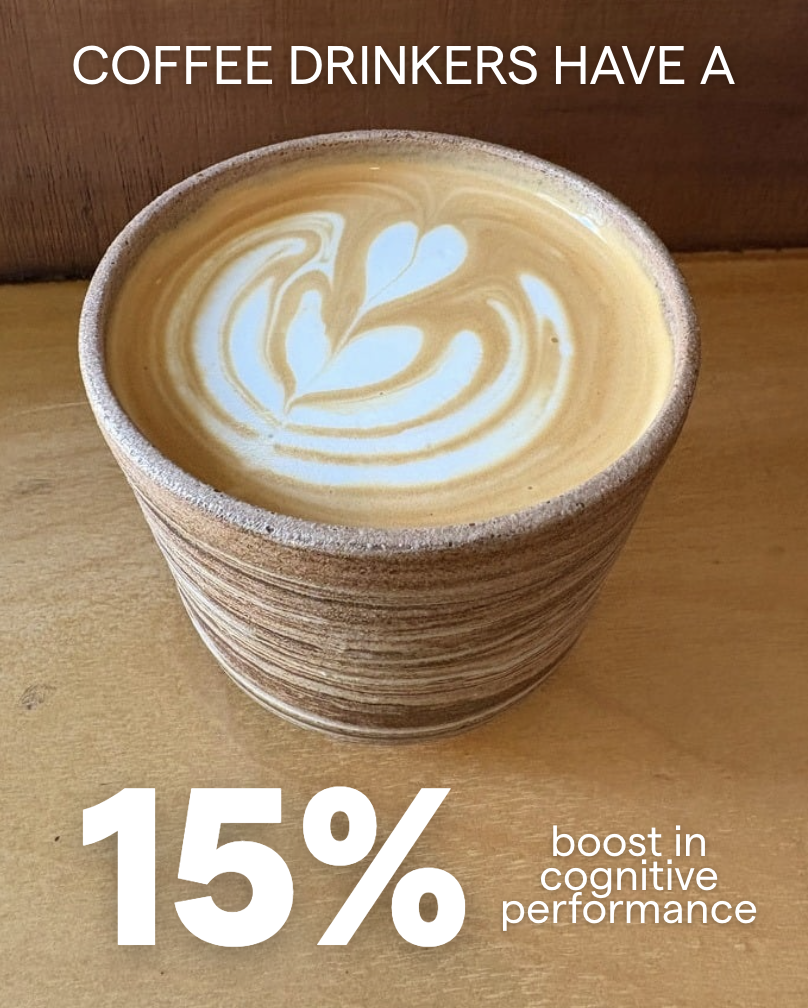
Any coffee drinker will tell you that caffeine improves mental performance. And they’re right, studies show boosts of up to 15% in cognitive performance. A medium to strong coffee - containing roughly 100-300mg of caffeine (around one to two espresso shots) - reliably improves:
Attention
Working memory
Reaction time
Alertness
Perceived energy
Caffeine is also arguably the most researched legal physical performance enhancer available. A dose of 3-6mg per kilogram of body weight (roughly 200-400mg for a 70kg athlete) consistently improves performance across:
Endurance: ~3-5% improvement
Strength and power: ~2-4% improvement
I love coffee - the taste, the smell, the ritual and the mood boost but I use it strategically.
Before a key training session or race, I’ll often time caffeine intake to maximise physical output. Ahead of an important piece of coaching delivery, a workshop, or a period of deep focus, I’ll often have caffeine.
These short-term performance benefits are relatively well known. But the long-term health benefits might surprise you.
Health and Longevity
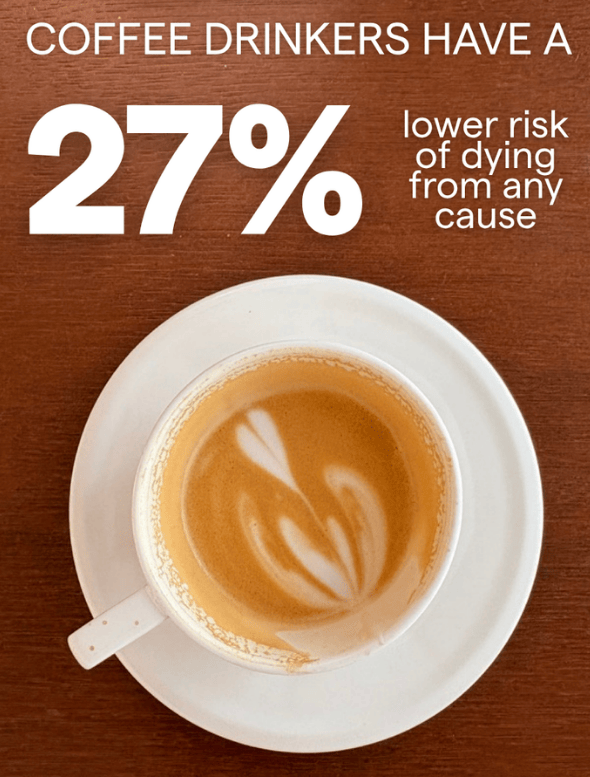
Research now consistently shows that coffee drinkers live longer than non-coffee drinkers - around a 27% lower risk of dying from any cause. Emerging research is showing that compounds in coffee slow biological ageing at a cellular level.
One major health and longevity benefit of coffee lies in its impact on the gut microbiome - the trillions of microorganisms living in our digestive tract that help regulate digestion, immunity, metabolism and even brain function.
The health of this ecosystem is heavily influenced by what we eat and drink. When our microbiome thrives, we see improvements in digestion, energy levels, mood and cognitive clarity.
Coffee supports the function of this ecosystem largely because it is rich in polyphenols - plant compounds also found in high concentrations of foods like berries.
Polyphenols act as powerful antioxidants, helping reduce inflammation and oxidative stress - two processes closely linked to ageing and chronic disease. Lower these, and you improve your chances of living a longer, healthier life.
Coffee also contains a surprising amount of soluble fiber – a cup contains roughly 2 grams, similar to a serving of broccoli. And fiber is something most of us don’t get enough of.
Key considerations
But wait. Before you go adding more coffee to your daily routine, there are a few important considerations.
1. Timing
Yes, coffee drinkers live longer than non-coffee drinkers. But there’s an important caveat. The longevity benefits were observed only in people who drank coffee earlier in the day.
Participants who consumed caffeinated coffee throughout the afternoon and evening didn’t show the same long-term benefits.

I always find time to squeeze in my morning coffee!
Why? Because caffeine remains in the system for a long time. When consumed late in the day, it can disrupt our sleep and circadian rhythm. These negative health effects of poor sleep offset the potential health benefits from the caffeine.
For this reason, most experts recommend avoiding caffeine within 8-10 hours of bedtime. So if you aim to sleep around 9 PM, your caffeine cutoff should ideally be around midday.
There’s also ongoing debate about whether delaying your first coffee for around 90 minutes after waking improves all day energy levels. Earlier theories suggested this might help regulate cortisol rhythms, but more recent research is less certain. For now, the jury is still out.
2. Amount
Most research suggests a healthy daily intake of caffeine is up to around 400mg, depending on body weight and individual tolerance. Since a typical espresso contains roughly 100mg, this usually equates to around two strong coffees per day.
Consumption levels that exceed this amount can begin to result in negative health consequences in the long term, as well as some rather unpleasant and anti-social side effects in the short term. Namely overstimulation, jitteriness and loose bowels.
3. Coffee on the go
Another thing to be aware of is caffeine content in commercial coffee. Some large chains deliberately brew stronger coffee so that their coffee delivers a more powerful caffeine hit than others. This then increases the chances you’ll keep coming back because coffees from elsewhere simply won’t give you the same buzz.
In some cases, a large coffee from a chain like Starbucks can contain close to your entire 400mg daily caffeine allowance in a single cup.
And one more important point here. Once coffee starts becoming a vehicle for large amounts of sugar, the health equation changes dramatically.
Take a Venti White Chocolate Mocha, for example which contains around:
520 calories
60 grams of sugar (about 15 teaspoons)
That’s 26% of the daily caloric intake for someone consuming 2,000 calories per day.
At that point, the negative impact of excess sugar quickly outweighs the potential health benefits of the coffee itself.
What About Decaf?
Some people simply don’t respond well to caffeine. Due to genetics, even small amounts can make them feel jittery, nauseous or anxious. The good news is that decaf coffee still provides many of the health benefits.
When caffeine is removed, the polyphenols and fiber remain, meaning decaf still supports the gut microbiome, metabolism and long-term health.
Polyphenols can also provide modest cognitive benefits by improving blood flow and oxygen delivery to the brain. They won’t produce the same mental boost as caffeine. But the effect isn’t insignificant and placebo is a thing.
What If I Don’t Like the Taste of Coffee?
Tea is another excellent option. Many teas contain polyphenols and smaller amounts of caffeine. Matcha tea is particularly interesting because roughly half of the powder is fiber, meaning it can provide even more fiber than coffee.
Caffeine levels are lower in teas and vary:
Green tea: ~20-50mg
Black tea: ~40-70mg
Matcha: ~60-90mg
So while tea can provide many of the long-term health benefits, the short-term performance boost is generally less than coffee due to the lower caffeine content.
I’ve turned all of this into a few simple guidelines for you:
Deepen Your Learning
For a deep dive into the science of the benefits of coffee & caffeine, I’d highly recommend this episode from the longevity expert Dr Rhona Patrick that is packed full of insights.
To explore the unique benefits of matcha, as compared to other teas and coffee, I really enjoyed this podcast episode from the nutrition company Zoe with Dr Tim Spector and the matcha expert Andrew Kojima.
